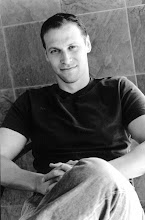
Christopher Hitchens may be a divisive figure, but he's also a brilliant, incisive, dynamic thinker. He never stoops to dogma or peddles ideas under the banner of "common sense." When asked on tour, I regularly name him as one of my favorite writers, though it often draws confused looks from my readers, who are looking for me to name crime-fiction authors. The quality and elegance of his writing are staggering, especially considering that his articles are time-sensitive and written to more intense deadlines than many of us writers face.
For two razor-sharp articles on free speech and the cartoon "debate," check out:
Stand Up For Denmark!
http://www.slate.com/id/2136714/?nav=navoa
And Cartoon Debate
http://www.slate.com/id/2135499/nav/tap2/
Thursday, March 02, 2006


Friday, February 24, 2006
Zach Helm
There's a great article in this month's Vanity Fair about screewriter/playwright/director Zach Helm. He and I share an agency - CAA - but more importantly, a professional philosophy. Evidently, Zach's career, while successful, wasn't going where he wanted it to. So he sat down and wrote a Manifesto - the ethics and rules that should govern his creativity. Since he's abided his Manifesto, his career has really taken off.
As I've learned - you have to respect your creativity or it'll get tired of you and move on.
A few points that he emphasized I believe make for important lessons for young writers.
1. Write what interests you. Don't get penned into one genre or field. This year, I've worked on a new thriller novel, a historical sports drama screenplay, and a six-man play that tackles social issues. Each one, oddly, informs the other and allows me to approach all my writing with a freshness that I wouldn't have if I focused on, say, crime fiction alone.
2. When placing your work, don't decide merely based on immediate financial gain. Money works in odd ways - sometimes, if you take more cash up front, it's a short-sighted proposition. Better to place your screenplay with the right producer or director, for example - someone who gets the project and respects you. You'll be happier if you're demanding that your work is treated with respect - and to get that, you have to treat your own work with respect. Plus, you never know when or how something is going to pay off - either in a financial or creative windfall.
3. Don't take crap jobs for money. Rewriting gigs can pay a lot of money in Hollywood, but they can also drain you. Likewise with other projects that sail down the pipeline. The first question should always be: Is this a stimulating, challenging project? When you're focusing on your own writing, why do anything except what is of the highest interest for you? For the money? If you're after that, you'd do much better to go into commercial real estate or investment banking. If you're going to tackle the trials and tribulations of a writing life, follow your passions. Take risks. Go out on limbs. It's a field where - at least for me - playing it safe means creative stagnation.
As I've learned - you have to respect your creativity or it'll get tired of you and move on.
A few points that he emphasized I believe make for important lessons for young writers.
1. Write what interests you. Don't get penned into one genre or field. This year, I've worked on a new thriller novel, a historical sports drama screenplay, and a six-man play that tackles social issues. Each one, oddly, informs the other and allows me to approach all my writing with a freshness that I wouldn't have if I focused on, say, crime fiction alone.
2. When placing your work, don't decide merely based on immediate financial gain. Money works in odd ways - sometimes, if you take more cash up front, it's a short-sighted proposition. Better to place your screenplay with the right producer or director, for example - someone who gets the project and respects you. You'll be happier if you're demanding that your work is treated with respect - and to get that, you have to treat your own work with respect. Plus, you never know when or how something is going to pay off - either in a financial or creative windfall.
3. Don't take crap jobs for money. Rewriting gigs can pay a lot of money in Hollywood, but they can also drain you. Likewise with other projects that sail down the pipeline. The first question should always be: Is this a stimulating, challenging project? When you're focusing on your own writing, why do anything except what is of the highest interest for you? For the money? If you're after that, you'd do much better to go into commercial real estate or investment banking. If you're going to tackle the trials and tribulations of a writing life, follow your passions. Take risks. Go out on limbs. It's a field where - at least for me - playing it safe means creative stagnation.
Monday, February 13, 2006
Peter Benchley
I was quite saddened yesterday to hear that Peter Benchley had died.
http://cnn.netscape.cnn.com/news/story.jsp?floc=ne-main-9-l5&flok=FF-APO-1404&idq=/ff/story/0001%2F20060213%2F0343150686.htm&sc=1404
Jaws was the first adult book I read. As a fourth grader, I was drawn in by the cover, which is my favorite of all time. I shoved a chair over to my parents' bookshelf so I could reach the book, which they kept on the top shelf beside Valley of the Horses (which would provide an entirely different kind of education for me a few months later). I absolutely loved Jaws, and went on to read all of Benchley's work. I wrote him a letter saying how much I liked Jaws, Jaws II, The Island and The Deep, and he wrote back thanking me, but saying he couldn't take credit for Jaws II, as he didn't write it. So much for my impressing him with my precociousness. I kept a written correspondence with him through high school and college, telling him I wanted to be a writer, and I sent him an ARC of The Tower when it was published. He wrote me a very kind congratulatory note.
He was a very bright man with an abiding love of the ocean. The water has never been the same....
http://cnn.netscape.cnn.com/news/story.jsp?floc=ne-main-9-l5&flok=FF-APO-1404&idq=/ff/story/0001%2F20060213%2F0343150686.htm&sc=1404
Jaws was the first adult book I read. As a fourth grader, I was drawn in by the cover, which is my favorite of all time. I shoved a chair over to my parents' bookshelf so I could reach the book, which they kept on the top shelf beside Valley of the Horses (which would provide an entirely different kind of education for me a few months later). I absolutely loved Jaws, and went on to read all of Benchley's work. I wrote him a letter saying how much I liked Jaws, Jaws II, The Island and The Deep, and he wrote back thanking me, but saying he couldn't take credit for Jaws II, as he didn't write it. So much for my impressing him with my precociousness. I kept a written correspondence with him through high school and college, telling him I wanted to be a writer, and I sent him an ARC of The Tower when it was published. He wrote me a very kind congratulatory note.
He was a very bright man with an abiding love of the ocean. The water has never been the same....
Wednesday, February 08, 2006
Sleepless in Seattle
This is the best recut trailer since The Shining one I posted a few months ago (which recut The Shining trailer to make the film appear to be a feel-good family comedy).
Check this out:
http://www.collegehumor.com/movies/1652506/
I never cease being amazed by how much of an impact music and editing have on our emotions. We have very easy buttons to push....
Check this out:
http://www.collegehumor.com/movies/1652506/
I never cease being amazed by how much of an impact music and editing have on our emotions. We have very easy buttons to push....
Thursday, February 02, 2006
Starting Out
I got a great email today from a devoted reader - and an aspiring writer. He asked advice on how to get started, and on what to do with his book once he's done with it. My response, I hope, could be helpful to other writers out there:
My advice is simple: write, write, and write some more. At this point, I wouldn’t focus on the end game – you’ve got a long ways to go before you have to worry about getting a book noticed. That’s sort of like a freshman in college asking about job recruitment after graduation. Right now, your focus should be honing your craft, and spending as many hours as possible in that chair. The market will have shifted so much by the time you’re ready to send out your manuscript that planning for it now would be a waste of time. Plus, you’ll need to get in touch with writing as its own process – as an end in itself. Only when you focus on the actual work – rather than the marketing to come - will you be able to enjoy yourself and grow as a writer.
All best of luck – and keep writing.
Gregg
My advice is simple: write, write, and write some more. At this point, I wouldn’t focus on the end game – you’ve got a long ways to go before you have to worry about getting a book noticed. That’s sort of like a freshman in college asking about job recruitment after graduation. Right now, your focus should be honing your craft, and spending as many hours as possible in that chair. The market will have shifted so much by the time you’re ready to send out your manuscript that planning for it now would be a waste of time. Plus, you’ll need to get in touch with writing as its own process – as an end in itself. Only when you focus on the actual work – rather than the marketing to come - will you be able to enjoy yourself and grow as a writer.
All best of luck – and keep writing.
Gregg
Monday, January 23, 2006
What You're Reading
A while ago, I posted a question on the website, asking what you'd read lately that you loved. Here are a few of the more unusual titles:
BLUE BLOOD, Edward Conlon's memoir about his first five years on the NYPD. I haven't read this yet, but I've heard wonderful things and can't wait to pick it up.
An advanced readers copy of EVERYTHING I'M CRACKED UP TO BE, by Jen Trynin. The book will be out in February 2006, so you heard about it first here.
Carlos Ruiz Zafon's SHADOW OF THE WIND.
A number of you were kind enough to mention my books, which I suppose makes sense, since that's how you found your way to my website. But thank you.
I'm reading Daniel Silva's A DEATH IN VIENNA, recommended to me by Chris Mooney, and I'm enjoying it very much. Silva manages to be sophisticated without being pretentious, and his research is extensive, his dialogue stunning - he's really a next-level author. I look forward to meeting him one of these tours.
Anything else you'd like to add?
BLUE BLOOD, Edward Conlon's memoir about his first five years on the NYPD. I haven't read this yet, but I've heard wonderful things and can't wait to pick it up.
An advanced readers copy of EVERYTHING I'M CRACKED UP TO BE, by Jen Trynin. The book will be out in February 2006, so you heard about it first here.
Carlos Ruiz Zafon's SHADOW OF THE WIND.
A number of you were kind enough to mention my books, which I suppose makes sense, since that's how you found your way to my website. But thank you.
I'm reading Daniel Silva's A DEATH IN VIENNA, recommended to me by Chris Mooney, and I'm enjoying it very much. Silva manages to be sophisticated without being pretentious, and his research is extensive, his dialogue stunning - he's really a next-level author. I look forward to meeting him one of these tours.
Anything else you'd like to add?
Monday, January 16, 2006
Great Writing Quotation
From last month's WRITTEN BY, the official magazine of the Writer's Guild:
"Writing is the art of applying the seat of the pants to the seat of the chair."
Mary Heaton Vorse
I think, if you're starting with some basic talent, the above will get you further in your writing than anything else.
"Writing is the art of applying the seat of the pants to the seat of the chair."
Mary Heaton Vorse
I think, if you're starting with some basic talent, the above will get you further in your writing than anything else.
Thursday, January 05, 2006
Back In Black
Hello everyone and welcome back.
The quotation with which I closed last year belongs to Mr. Kurt Vonnegut, who incidently has a new book out (after he swore he'd never publish another book). The new book, A Man Without a Country, is a collection of essays, and some believe that this is in keeping with his vow, that he technically said he'd never publish another NOVEL. The book is excellent - you'll read it in one sitting. He turns his trademark wit and a caustic eye to contemporary politics and finds much worth mocking.
I hope everyone got in lots of reading over the break. That's what vacations are for. What were the best books you read these past few weeks?
I'd have to say my favorite was THE CUTTING ROOM by Louise Welch, a Scottish novel about an auctioneer who finds a snuff photo in an attic and becomes obsessed with determining whether it's real. The tone and voice were excellent, the plot - at times - chilling.
The quotation with which I closed last year belongs to Mr. Kurt Vonnegut, who incidently has a new book out (after he swore he'd never publish another book). The new book, A Man Without a Country, is a collection of essays, and some believe that this is in keeping with his vow, that he technically said he'd never publish another NOVEL. The book is excellent - you'll read it in one sitting. He turns his trademark wit and a caustic eye to contemporary politics and finds much worth mocking.
I hope everyone got in lots of reading over the break. That's what vacations are for. What were the best books you read these past few weeks?
I'd have to say my favorite was THE CUTTING ROOM by Louise Welch, a Scottish novel about an auctioneer who finds a snuff photo in an attic and becomes obsessed with determining whether it's real. The tone and voice were excellent, the plot - at times - chilling.
Saturday, December 17, 2005
Happy Holiday Writing
All best wishes for the holidays, in particular those of you who are gonna get in some writing or good solid reading during those long days when the phones don't ring as often, and you have a break from your jobs.
I leave you with this quotation from one of my favorite writers, who I'll identify the first of the new year:
"When I write, I feel like an armless legless man with a crayon in his mouth."
I leave you with this quotation from one of my favorite writers, who I'll identify the first of the new year:
"When I write, I feel like an armless legless man with a crayon in his mouth."
Sunday, December 11, 2005
No One Writes Violence Like Bowles
I've been reading the Collected Short Stories of Paul Bowles, and have found his matter-of-fact descriptions of violence, particularly in stories like "The Delicate Prey" and "A Distant Episode" to be shatteringly effective. His attitude? "Hey, I'm not making this up; I'm just telling it like it is. And I can't quite muster the energy to get up from my desk, where I'm writing all this down, to help anyone."
One of his central themes—the collision of Westerners with primitive cultures—is striking in what it reveals about Western perceptions.
I think that many contemporary writers who tend to sentimentalize, fetishize, or emotionalize violence could learn much about his cool handling of the topic. The most objective descriptions yield the greatest horror and reader response.
Below is an encyclopedia entry about Bowles for the uninitiated:
Bowles was born in Jamaica, Queens, New York City to Rena (née Rennewisser) and Claude Dietz Bowles, where his father was a dentist, and spent his childhood at 108 Hardenbrook Avenue, then 207 De Grauw Avenue, and later 34 Terrace Avenue. His mother read Nathaniel Hawthorne and Edgar Allan Poe to him as a child, and Bowles made notebooks of writing and drawing throughout his childhood. When Bowles was 8, his father bought a phonograph and classic records; Bowles was interested in jazz but such records were forbidden in the house. About this time his family bought a piano and Bowles studied theory, singing, and piano. He continued to keep a diary of imaginary goings-on during this time, and also wrote a daily newspaper. In 1922, at age 11, Bowles bought his first book of poetry, Arthur Waley's A Hundred and Seventy Chinese Poems. In high school he attended a performance of Stravinsky's Firebird at Carnegie Hall which made a profound impression.
Bowles entered the University of Virginia in 1928, where his interests included T. S. Eliot's The Wasteland, Prokofiev, Duke Ellington, Gregorian chants, and the blues, and he published two items in transition. He also heard music by George Antheil and Henry Cowell. In April 1929 he dropped out of school to make his first trip to Paris where he worked as a switchboard operator for the Herald Tribune. He returned home in July and started writing Without Stopping, his first mature book. He left college without a degree in 1930.
France and New York
On a subsequent trip to France in 1931, he became a part of Gertrude Stein's literary and artistic circle and on her advice, that summer he made his first visit to Tangier with his friend and music teacher the composer Aaron Copland. In Berlin, he met Stephen Spender and Christopher Isherwood, who gives the name Bowles to the heroine of Goodbye to Berlin. The following year he returned to North Africa and traveled throughout other parts of Morocco, the Sahara and Algeria. Throughout the next decade, Bowles composed a good body of music including sonatas, song cycles, and music for stage productions (including Doctor Faustus directed by Orson Welles, the orchestration for George Balanchine's Yankee Clipper at Lincoln Kirstein's request), and also made early recordings of North African music.
In 1938 he married author and playwright Jane Auer (Feb. 22, 1917 - May 4, 1973), and after a brief sojourn in France they were prominent among the literary figures of New York throughout the 1940s, with Paul working under Virgil Thomson as a music critic at the New York Herald Tribune. His light opera The Wind Remains, based on a poem by Garcia Lorca, was performed in 1943 with choreography by Merce Cunningham and conducted by Leonard Bernstein. In 1945 he unexpectedly began writing prose again, beginning with a few short stories including A Distant Episode. He also translated Jorge Luis Borges at this time, and his translation of the play No Exit (entitled Huis-clos in French) by Jean-Paul Sartre, directed by John Huston, won a Drama Critic's Award. The subsequent year, he received an advance for a novel, and began writing The Sheltering Sky, which quickly rose to the New York Times best-seller list when published by New Directions.
Tangier and elsewhere
Also in 1947, he moved permanently to Tangier, and his wife Jane followed him there in 1948. The Bowleses became iconoclasts of the Tangerinos—American and European expatriates centered in Tangier. During the following decade Bowles wrote much of his most famous prose. Prominent literary friends visited Paul and Jane Bowles in Tangier beginning in the late 1940s, including Truman Capote, Tennessee Williams and Gore Vidal. The Beat writers Allen Ginsberg and William S. Burroughs followed in the mid-1950s. In Morocco, Bowles concentrated on writing novels, short stories and travel pieces, and wrote incidental music for nine plays presented by the American School of Tangier. In 1952 Bowles bought the tiny island of Taprobane, off the coast of Ceylon (now Sri Lanka), where he wrote much of his novel The Spider's House, returning to Tangier in the warmer months.
In 1961, Bowles began tape-recording and translating works of Moroccan authors and storie-tellers, including stories by long-time friend Ahmed Yacoubi, Larbi Layachi (under the pseudonym Driss ben Hamed Charhadi), and Mohammed Mrabet. Rather oddly, Bowles spent one term at the English Department of the San Fernando Valley State College in 1968, teaching existentialism and the novel. Most of the time, however, he remained in Tangier with brief interludes elsewhere overseas.
After the death of Jane Bowles in 1973 in Malaga, Spain, Bowles continued to live in Tangier, writing and receiving visitors to his modest apartment. In 1995 Paul Bowles made a rare and final return to New York for a festival of his music at the Lincoln Center and a symposium and interview held at the New School for Social Research.
Paul Bowles died of heart failure at the Italian Hospital in Tangier on November 18, 1999 at the age of 88. The following day a full-page obituary appeared in The New York Times. Although he had lived in Morocco for 52 years, he was buried in Lakemont, New York, next to the graves of his parents and grandparents.
Selected works
Besides being a composer and novelist, Bowles published fourteen short story collections, three volumes of poetry, numerous translations, and books of travel writing and autobiography.
One of his central themes—the collision of Westerners with primitive cultures—is striking in what it reveals about Western perceptions.
I think that many contemporary writers who tend to sentimentalize, fetishize, or emotionalize violence could learn much about his cool handling of the topic. The most objective descriptions yield the greatest horror and reader response.
Below is an encyclopedia entry about Bowles for the uninitiated:
Bowles was born in Jamaica, Queens, New York City to Rena (née Rennewisser) and Claude Dietz Bowles, where his father was a dentist, and spent his childhood at 108 Hardenbrook Avenue, then 207 De Grauw Avenue, and later 34 Terrace Avenue. His mother read Nathaniel Hawthorne and Edgar Allan Poe to him as a child, and Bowles made notebooks of writing and drawing throughout his childhood. When Bowles was 8, his father bought a phonograph and classic records; Bowles was interested in jazz but such records were forbidden in the house. About this time his family bought a piano and Bowles studied theory, singing, and piano. He continued to keep a diary of imaginary goings-on during this time, and also wrote a daily newspaper. In 1922, at age 11, Bowles bought his first book of poetry, Arthur Waley's A Hundred and Seventy Chinese Poems. In high school he attended a performance of Stravinsky's Firebird at Carnegie Hall which made a profound impression.
Bowles entered the University of Virginia in 1928, where his interests included T. S. Eliot's The Wasteland, Prokofiev, Duke Ellington, Gregorian chants, and the blues, and he published two items in transition. He also heard music by George Antheil and Henry Cowell. In April 1929 he dropped out of school to make his first trip to Paris where he worked as a switchboard operator for the Herald Tribune. He returned home in July and started writing Without Stopping, his first mature book. He left college without a degree in 1930.
France and New York
On a subsequent trip to France in 1931, he became a part of Gertrude Stein's literary and artistic circle and on her advice, that summer he made his first visit to Tangier with his friend and music teacher the composer Aaron Copland. In Berlin, he met Stephen Spender and Christopher Isherwood, who gives the name Bowles to the heroine of Goodbye to Berlin. The following year he returned to North Africa and traveled throughout other parts of Morocco, the Sahara and Algeria. Throughout the next decade, Bowles composed a good body of music including sonatas, song cycles, and music for stage productions (including Doctor Faustus directed by Orson Welles, the orchestration for George Balanchine's Yankee Clipper at Lincoln Kirstein's request), and also made early recordings of North African music.
In 1938 he married author and playwright Jane Auer (Feb. 22, 1917 - May 4, 1973), and after a brief sojourn in France they were prominent among the literary figures of New York throughout the 1940s, with Paul working under Virgil Thomson as a music critic at the New York Herald Tribune. His light opera The Wind Remains, based on a poem by Garcia Lorca, was performed in 1943 with choreography by Merce Cunningham and conducted by Leonard Bernstein. In 1945 he unexpectedly began writing prose again, beginning with a few short stories including A Distant Episode. He also translated Jorge Luis Borges at this time, and his translation of the play No Exit (entitled Huis-clos in French) by Jean-Paul Sartre, directed by John Huston, won a Drama Critic's Award. The subsequent year, he received an advance for a novel, and began writing The Sheltering Sky, which quickly rose to the New York Times best-seller list when published by New Directions.
Tangier and elsewhere
Also in 1947, he moved permanently to Tangier, and his wife Jane followed him there in 1948. The Bowleses became iconoclasts of the Tangerinos—American and European expatriates centered in Tangier. During the following decade Bowles wrote much of his most famous prose. Prominent literary friends visited Paul and Jane Bowles in Tangier beginning in the late 1940s, including Truman Capote, Tennessee Williams and Gore Vidal. The Beat writers Allen Ginsberg and William S. Burroughs followed in the mid-1950s. In Morocco, Bowles concentrated on writing novels, short stories and travel pieces, and wrote incidental music for nine plays presented by the American School of Tangier. In 1952 Bowles bought the tiny island of Taprobane, off the coast of Ceylon (now Sri Lanka), where he wrote much of his novel The Spider's House, returning to Tangier in the warmer months.
In 1961, Bowles began tape-recording and translating works of Moroccan authors and storie-tellers, including stories by long-time friend Ahmed Yacoubi, Larbi Layachi (under the pseudonym Driss ben Hamed Charhadi), and Mohammed Mrabet. Rather oddly, Bowles spent one term at the English Department of the San Fernando Valley State College in 1968, teaching existentialism and the novel. Most of the time, however, he remained in Tangier with brief interludes elsewhere overseas.
After the death of Jane Bowles in 1973 in Malaga, Spain, Bowles continued to live in Tangier, writing and receiving visitors to his modest apartment. In 1995 Paul Bowles made a rare and final return to New York for a festival of his music at the Lincoln Center and a symposium and interview held at the New School for Social Research.
Paul Bowles died of heart failure at the Italian Hospital in Tangier on November 18, 1999 at the age of 88. The following day a full-page obituary appeared in The New York Times. Although he had lived in Morocco for 52 years, he was buried in Lakemont, New York, next to the graves of his parents and grandparents.
Selected works
Besides being a composer and novelist, Bowles published fourteen short story collections, three volumes of poetry, numerous translations, and books of travel writing and autobiography.
Saturday, December 03, 2005
Stranger....
Last week's post was the opening line from Camus' The Stranger. And as Ms. Clair was so good to mention, I frequently point out, when inanely asked about the differences between literary and commercial (non-literary?) fiction, that Camus found his inspiration for The Stranger from James M. Cain's The Postman Always Rings Twice. So stick that in your beret.
Book of the week: recommended to me by director pal John Moore (who shot Behind Enemy Lines, which deals with the Serbian/Croatian/Muslim/not-UN war) - MY WAR GONE BY, I MISS IT SO, by Anthony Lloyd. It deserves to be mentioned with Tim O'Brien's The Things They Carried and Herr's Dispatches (one of the sources of Kubrick's Full Metal Jacket). It is THAT good. A stunning, ironic, wry memoir of Lloyd's search for war (while he's kicking a heroin habit, no less). It is simply magnificent writing.
I recommended it to my longtime friend Jess Taylor, who had this to write about it:
"...is akin (though I would hardly know) to descending rapidly in a submarine to escape depth charges, all the while having those dropping them calculate your rate of descent, so the explosions follow you, and your sub implodes a bit more with each blast.
Remember that riveting part in which he [Lloyd] hears from a group of Croatian soldiers? How they spent a half-day trying to get their commander, a young, small-town athlete (and war criminal) out from under enemy (Bosnian Muslim) fire when he was wounded and down in a field. More men kept trying to rescue him, and getting killed. Finally the commander lying out in the field draws his pistol, puts it to his head, and kills himself.
As the soldier relating the episode summarizes-- 'There are two ways to die here. You can die doing the right thing for the wrong reason, or die doing the wrong thing for the right reason.'"
The above line that Jess picked out is one of my favorites, though there are many more gems in this brilliant book.
Book of the week: recommended to me by director pal John Moore (who shot Behind Enemy Lines, which deals with the Serbian/Croatian/Muslim/not-UN war) - MY WAR GONE BY, I MISS IT SO, by Anthony Lloyd. It deserves to be mentioned with Tim O'Brien's The Things They Carried and Herr's Dispatches (one of the sources of Kubrick's Full Metal Jacket). It is THAT good. A stunning, ironic, wry memoir of Lloyd's search for war (while he's kicking a heroin habit, no less). It is simply magnificent writing.
I recommended it to my longtime friend Jess Taylor, who had this to write about it:
"...is akin (though I would hardly know) to descending rapidly in a submarine to escape depth charges, all the while having those dropping them calculate your rate of descent, so the explosions follow you, and your sub implodes a bit more with each blast.
Remember that riveting part in which he [Lloyd] hears from a group of Croatian soldiers? How they spent a half-day trying to get their commander, a young, small-town athlete (and war criminal) out from under enemy (Bosnian Muslim) fire when he was wounded and down in a field. More men kept trying to rescue him, and getting killed. Finally the commander lying out in the field draws his pistol, puts it to his head, and kills himself.
As the soldier relating the episode summarizes-- 'There are two ways to die here. You can die doing the right thing for the wrong reason, or die doing the wrong thing for the right reason.'"
The above line that Jess picked out is one of my favorites, though there are many more gems in this brilliant book.
Wednesday, November 30, 2005
Monday, November 21, 2005
A Serious Program Graduate.....
This is a great email I received from a reader - and one helluva character. Thought those of you who "got with the Program" might appreciate hearing from a tried and tested Program graduate. I left out his name and telling details to protect the innocent...
___
Mr. Hurwitz:
First, KILL CLAUSE and now THE PROGRAM. KC got my attention, TP has me stunned.
An avid and voracious reader, I download dozens of e-books every few months. I will buy the hardcover of THE PROGRAM, as I plan to reread it, something I’ve only done one or two times in my 64 years.
Graduating class of 1960, I lived among the cultists for more than a decade, in my travels to Topanga, Berzerkly, and Eselen, the Pamirs and Ibiza, Southwest deserts and my hometown of L.A.
….sitting in front of the Beverly Hills Hotel on a bus-stop bench, giggling at the traffic, the ‘fact’ of my just having lived 1.5 yrs. in the Northwest Frontier of Pakistan, Nepal, Afghanistan…hitching barefoot to the Baleares…now in a three-piece, selling air freight…soon to be lobster-fishing at 3:00 a.m. off San Nicholas Island, So. Cal. with Naval artillery screaming o’head, clods of the island raining on me…to home here in Idaho with my eight and ten-year-old kids, the three of us….
I'm sure that the statutes have run out on any of the chapters of my reality that I may have misplaced...let's see...1960 thru 1967...haven't a clue....something about Zomeworks in New Mexico...Haight-Ashbury when SuperSpade flew off the bridge...walking into the Psychedelicatessen in NYC, plunking down $$ and wordlessly walking out 30 seconds later with a K of something or other...standing in the middle of Connaught Circus, downtown New Delhi, with a used one-way airline ticket and $200, mumbling 'man...really f****d up bigtime, here...'...breakfast with the King of Chitral a few months and miles later...as my grandfather said "peregrinations in odd places".
Your work rings true and solid. Stark terror in the cults…Lock and Load, yes…common-sensors cannot comprehend, God bless us, everyone….
Must let the 'gotcha dust' settle from your last ride. I'm still seeing events from Troubleshooter out of the corner of my mind as I drive down the street.... Your characters really live.
Thanks for putting it out there. Thanks for the Rackleys…
___
Mr. Hurwitz:
First, KILL CLAUSE and now THE PROGRAM. KC got my attention, TP has me stunned.
An avid and voracious reader, I download dozens of e-books every few months. I will buy the hardcover of THE PROGRAM, as I plan to reread it, something I’ve only done one or two times in my 64 years.
Graduating class of 1960, I lived among the cultists for more than a decade, in my travels to Topanga, Berzerkly, and Eselen, the Pamirs and Ibiza, Southwest deserts and my hometown of L.A.
….sitting in front of the Beverly Hills Hotel on a bus-stop bench, giggling at the traffic, the ‘fact’ of my just having lived 1.5 yrs. in the Northwest Frontier of Pakistan, Nepal, Afghanistan…hitching barefoot to the Baleares…now in a three-piece, selling air freight…soon to be lobster-fishing at 3:00 a.m. off San Nicholas Island, So. Cal. with Naval artillery screaming o’head, clods of the island raining on me…to home here in Idaho with my eight and ten-year-old kids, the three of us….
I'm sure that the statutes have run out on any of the chapters of my reality that I may have misplaced...let's see...1960 thru 1967...haven't a clue....something about Zomeworks in New Mexico...Haight-Ashbury when SuperSpade flew off the bridge...walking into the Psychedelicatessen in NYC, plunking down $$ and wordlessly walking out 30 seconds later with a K of something or other...standing in the middle of Connaught Circus, downtown New Delhi, with a used one-way airline ticket and $200, mumbling 'man...really f****d up bigtime, here...'...breakfast with the King of Chitral a few months and miles later...as my grandfather said "peregrinations in odd places".
Your work rings true and solid. Stark terror in the cults…Lock and Load, yes…common-sensors cannot comprehend, God bless us, everyone….
Must let the 'gotcha dust' settle from your last ride. I'm still seeing events from Troubleshooter out of the corner of my mind as I drive down the street.... Your characters really live.
Thanks for putting it out there. Thanks for the Rackleys…
Tuesday, November 15, 2005
Hard Case Crime
Last week's quotation was from Macbeth, the original Godfather.
I just read Stephen King's The Colorado Kid, out from Hard Case Crime. The HCC books are absolutely beautiful - the aesthetics mirror pulp paperbacks from the '50s, and indeed they are reprinting some classic crime novels, as well as commissioning new ones to be released in paperback format (King, Max Allen Collins, Jason Starr and Ken Bruen).
In the controversial afterword to The Colorado King, Stephen King says, "I write to find out what I think." I would guess that this is an intentional homage to Joan Dideon's quotation, which I listed on my blog (see entry two back titled Dante's Revenge).
If you haven't already checked out Hard Case Crime, I suggest you do so. They'll bring back memories. These guys do it precisely right.
I just read Stephen King's The Colorado Kid, out from Hard Case Crime. The HCC books are absolutely beautiful - the aesthetics mirror pulp paperbacks from the '50s, and indeed they are reprinting some classic crime novels, as well as commissioning new ones to be released in paperback format (King, Max Allen Collins, Jason Starr and Ken Bruen).
In the controversial afterword to The Colorado King, Stephen King says, "I write to find out what I think." I would guess that this is an intentional homage to Joan Dideon's quotation, which I listed on my blog (see entry two back titled Dante's Revenge).
If you haven't already checked out Hard Case Crime, I suggest you do so. They'll bring back memories. These guys do it precisely right.
Monday, November 07, 2005
T. Jefferson Parker and Our New Quotation
Last week's quotation....Jeff Parker. My favorite thing about Jeff's writing is his characterization, and that sentence is a beaut. He manages to work in a complex psychological take on Merci without it feeling heavy handed, and without giving it too much emphasis. It's funny, even, and it deploys character in the service of the plot.
I had a really funny experience once reading one of Jeff's books. He used the word "skosh," and I looked it up in my American Heritage Dictionary, curious as to its origin (Japanese). The dictionary then offered a usage example from, you guessed it, T Jefferson Parker. I told Jeff and we had a good laugh and then he went out and bought the dictionary. Hell, I would have too.
Next quotation, one of my all-time favorites (in keeping with our crime theme):
"I am in blood stepp'd in so far that, should I wade no more, returning were as tedious as go o'er."
I had a really funny experience once reading one of Jeff's books. He used the word "skosh," and I looked it up in my American Heritage Dictionary, curious as to its origin (Japanese). The dictionary then offered a usage example from, you guessed it, T Jefferson Parker. I told Jeff and we had a good laugh and then he went out and bought the dictionary. Hell, I would have too.
Next quotation, one of my all-time favorites (in keeping with our crime theme):
"I am in blood stepp'd in so far that, should I wade no more, returning were as tedious as go o'er."
Sunday, October 30, 2005
And Now, Back to Crime
Last week's quotation was from Joan Didion. What I like about it is how she inverts the usual relationship between thinking and writing. I've found quite often that the process of writing actually clarifies my thoughts about a particular topic, or brings me to a new realization. One that is less "common sense" oriented. Because sitting, staring at the screen and trying to crack the dark heart of a matter often leads to something more truthful. And the truth is usually surprising. Quite often, people think that is reversed, that an author has a particular philosophy and he or she writes to provide a narrative embodiment of that. (See Ayn Rand). I tend to think that yields bad writing or propaganda.
But you all disliked the quotation. So this week, I'm going with something more in our collective roundhouse, from one of my favorites:
"Outside, the bloodhounds started yelping, and Merci swore there was something mournful in their voices but she knew she was eager for self-punishment and if it took personifying three dogs to beat herself even lower she would leap at the chance to do it."
If you know who wrote this, please write about it without giving away the author's name so other people can guess at it too.
But you all disliked the quotation. So this week, I'm going with something more in our collective roundhouse, from one of my favorites:
"Outside, the bloodhounds started yelping, and Merci swore there was something mournful in their voices but she knew she was eager for self-punishment and if it took personifying three dogs to beat herself even lower she would leap at the chance to do it."
If you know who wrote this, please write about it without giving away the author's name so other people can guess at it too.
Saturday, October 22, 2005
Dante's Revenge
Okay - I told you they'd get harder. The last quotation was indeed Dante. It's most frequently identified, at least these days, in relation to JFK, who spoke the famous sentence at the signing of a charter establishing the German Peace Corps in 1963.
And now, a lesser known quotation from a very famous writer:
"I write entirely to find out what I'm thinking, what I'm looking at, what I see and what it means. What I want and what I fear."
Comments, remarks, agitations, guesses, imprecations are welcome. And no, Jon, you can't have any cookies.
And now, a lesser known quotation from a very famous writer:
"I write entirely to find out what I'm thinking, what I'm looking at, what I see and what it means. What I want and what I fear."
Comments, remarks, agitations, guesses, imprecations are welcome. And no, Jon, you can't have any cookies.
Saturday, October 15, 2005
The Hottest Places in Hell
Last week's quotation was, as many of you know, written by Raymond Chandler.
"...who is not himself mean" to me is the key element. He can be tough, even vicious, but this cannot stem from an essential meanness. Chandler, masterful in his word choice, would have been aware that claiming that somone is not mean stops short of claiming that he is nice or kind.
I very much enjoyed your various comments and perspectives. A slumming angel indeed. Please, please, please do not look up the quotations or Google them. It's far more interesting to hear your observations when they come from prior knowledge or guesswork.
Now, here's this week's quotation:
"The hottest places in Hell are reserved for those who, in a period of moral crisis, maintain their neutrality."
Have at it.
"...who is not himself mean" to me is the key element. He can be tough, even vicious, but this cannot stem from an essential meanness. Chandler, masterful in his word choice, would have been aware that claiming that somone is not mean stops short of claiming that he is nice or kind.
I very much enjoyed your various comments and perspectives. A slumming angel indeed. Please, please, please do not look up the quotations or Google them. It's far more interesting to hear your observations when they come from prior knowledge or guesswork.
Now, here's this week's quotation:
"The hottest places in Hell are reserved for those who, in a period of moral crisis, maintain their neutrality."
Have at it.
Friday, October 07, 2005
Down These Mean Streets
I'm gonna post a quotation about writing every week, and you folks have to guess who said or wrote it. And beyond the simple guesswork, I'd like to know your take on it. Why you like it or don't like it, or in some instances, your interpretation of it.
Since this is the first one, I'm starting with a layup. After this, the training wheels come off.
"Down these mean streets a man must go who is not himself mean, who is neither tarnished nor afraid. He is the hero, he is everything. He must be a complete man and a common man and yet an unusual man. He must be, to use a rather weathered phrase, a man of honor, by instinct, by inevitability, without thought of it, and certainly without saying it. He must be the best man in his world and a good enough man for any world."
Since this is the first one, I'm starting with a layup. After this, the training wheels come off.
"Down these mean streets a man must go who is not himself mean, who is neither tarnished nor afraid. He is the hero, he is everything. He must be a complete man and a common man and yet an unusual man. He must be, to use a rather weathered phrase, a man of honor, by instinct, by inevitability, without thought of it, and certainly without saying it. He must be the best man in his world and a good enough man for any world."
Saturday, October 01, 2005
Not Quite THE SHINING
This is a brilliant trailer, cut by a film student.
http://www.ps260.com/molly/SHINING%20FINAL.mov
It's a great display of 1. how misleading trailers can be, and 2. how important - and often manipulative - music can be in film. It's also funny as hell for those of you familiar with the film. How little it takes in a line reading, a directoral choice, a quick cut, to skew meaning one way or another.
http://www.ps260.com/molly/SHINING%20FINAL.mov
It's a great display of 1. how misleading trailers can be, and 2. how important - and often manipulative - music can be in film. It's also funny as hell for those of you familiar with the film. How little it takes in a line reading, a directoral choice, a quick cut, to skew meaning one way or another.
Subscribe to:
Posts (Atom)