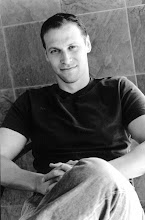
Otto Penzler, master bookseller and world-leading expert in the genre, is no stranger to controversy. I get a huge kick out of Otto and enjoy spending time with him. He's unafraid to speak his mind and he's got a sharp, cutting wit that makes sitting through awards banquets (when you're at his table), an entirely different kind of experience.
Since I've been misquoted and "edited" enough by journalists in the past, I know not to take the below quotations (reported in The Book Standard) at face value. I know firsthand that Otto has enormous respect for various female authors, and I'm sure that his comments were presented in the most controversial fashion possible. That said, Otto ain't afraid to state his case and he - like many readers of hard-boiled crime fiction - ain't no fan of the cozie.
The comments below raise some interesting issues. Do you have a strong preference for hard-boiled fiction over cozies? Do you think there's a gender bias for who writes what? For my part, I've read my share of brilliant crime fiction by women and seen a few awful cat mysteries by men, but I know I'll take a Boston Teran over a 200-pager where a cupcake attacks a calico.
___________________
Genteel? Or bloody? That distinction between two sub-genres of mystery books—“cozies” and “hard-boiled”—may determine who wins the Edgar Award for Best Novel tonight. And the outcome could go to the heart of a debate within the industry: Are female mystery-writers—most often the authors of the more non-threatening, proper cozies—even worthy of the award? Otto Penzler, dean of mystery-writing in America, says no.
“The women who write [cozies] stop the action to go shopping, create a recipe, or take care of cats,” he says. “Cozies are not serious literature. They don’t deserve to win. Men take [writing] more seriously as art. Men labor over a book to make it literature. There are wonderful exceptions, of course—P.D. James, Ruth Rendell.”
Margaret Maron, president of Mystery Writers of America, which doles out the Edgars, and winner of one herself (for Bootlegger’s Daughter in 1993), sniffs at this bias, as she considers it, saying that good writers have been overlooked by the MWA as a result of unfair favoring of male authors and their bloodier plots. “Wit, humor, and domesticity haven’t been considered as significant as blood and violence. Charlotte MacLeod was never nominated,” Maron says, recalling the late author of a series of cozies. “She wrote some very funny mysteries, but they were considered ‘soft.’ She didn’t use the ‘F’ word. She wasn’t walking those mean streets.’ ”
That McLeod and the majority of authors who write cozies are women raises a thorny question. Are the Edgars—and, by extension, the mystery industry as a whole—simply sexist?
Saturday, April 30, 2005


Thursday, April 21, 2005
Wrst adn Typnig Problems
So I brok emy wrist in a soccer match Sunday and monday found my arm ensconced i a cast (pruple!) from hand to elbow. Im, in the middle ofna editing phase right now, whuich is proving trying sinc e I cant reall y type so well. RThere is a certani amount of rfustratio n for someonme ike me whos used tp typing and wokring at a certain pace tobe slwed down so drasticaly.
But tehrs also somenthing of a freedom inm being permitted toi write emails and blog entries witht eh typos that most poeple use! No more spellchecK! No more porofreading! I wonder if my publisher will hbe happy with a new manuscript that looks like sthis.
But tehrs also somenthing of a freedom inm being permitted toi write emails and blog entries witht eh typos that most poeple use! No more spellchecK! No more porofreading! I wonder if my publisher will hbe happy with a new manuscript that looks like sthis.
Friday, April 15, 2005
Crazy Geek Reader Stats
Amazon offers new stats for books, evidently after incorporating aspects of Schott's Original Miscellany into their website. On the home page for a book, one can click on either a "concordance" or "text stats" link.
These links yielded the following information on The Program:
These are the 100 most frequently used words in this book.
across against arms away bear behind better call came chair chris come
cult day door down dray even eyes face father feel felt few fingers
first floor get girl go going good got gregg group guy hair hand hard
head himself hurwitz janie john know last leah left let light lips
little look looked man might mouth name nancy need new now old open own
people phone program pulled reggie right room said sat say see side
skate something stanley still take tannino td teacher tell thing think
thought three tim time tom took turned two voice want work years
Text Stats
Readability:/Complexity:
Fog Index: 7.6 (this is a measure of readability - between 7 and 8 is ideal)
Complex Words: 9%
Flesch Index: 71.0
Syllables/Word: 1.5
Flesch-Kincaid Index: 5.8
Words/Sentence: 10.0
Number of: Fun Stats:
Characters: 365,999
Words/Dollar:3,775
Words: 62,171
Words/Ounce:2,775
Sentences: 6,231
So here's my new ad for The Program: BUY NOW AND GET 3,775 WORDS PER DOLLAR!
These links yielded the following information on The Program:
These are the 100 most frequently used words in this book.
across against arms away bear behind better call came chair chris come
cult day door down dray even eyes face father feel felt few fingers
first floor get girl go going good got gregg group guy hair hand hard
head himself hurwitz janie john know last leah left let light lips
little look looked man might mouth name nancy need new now old open own
people phone program pulled reggie right room said sat say see side
skate something stanley still take tannino td teacher tell thing think
thought three tim time tom took turned two voice want work years
Text Stats
Readability:/Complexity:
Fog Index: 7.6 (this is a measure of readability - between 7 and 8 is ideal)
Complex Words: 9%
Flesch Index: 71.0
Syllables/Word: 1.5
Flesch-Kincaid Index: 5.8
Words/Sentence: 10.0
Number of: Fun Stats:
Characters: 365,999
Words/Dollar:3,775
Words: 62,171
Words/Ounce:2,775
Sentences: 6,231
So here's my new ad for The Program: BUY NOW AND GET 3,775 WORDS PER DOLLAR!
Monday, April 11, 2005
Rejoice, Baseball has Begun
Since I'm going to be chairing the Best Thriller Screenplay award for ITW and I'm on the Best Film committee for MWA, I'm not allowed to venture publicly (oh, okay, to publicly venture) opinions on thriller and mystery films. Bummer.
But Fever Pitch, the new Jimmy Fallon/Drew Barrymore movie, gladly falls into neither category. So get off your duff and go see it already. If you're a baseball fan, have baseball fans in your family, or have the misfortune to be married to a baseball fan, you'll get a kick out of it.
To that, I will merely add the following quotation, from no less an authority than John Cheever:
"All literary men are Red Sox fans. To be a Yankee fan in literary society is to endanger your life."
Of course, I believe that fans of the San Francisco Giants also tend to be Renaissance men, but then I might be biased.
But Fever Pitch, the new Jimmy Fallon/Drew Barrymore movie, gladly falls into neither category. So get off your duff and go see it already. If you're a baseball fan, have baseball fans in your family, or have the misfortune to be married to a baseball fan, you'll get a kick out of it.
To that, I will merely add the following quotation, from no less an authority than John Cheever:
"All literary men are Red Sox fans. To be a Yankee fan in literary society is to endanger your life."
Of course, I believe that fans of the San Francisco Giants also tend to be Renaissance men, but then I might be biased.
Tuesday, March 29, 2005
Blurb Bitching II (The Sequel)
Okay, I got a fair number of emails in response to my Blurb Bitching blog entry (a few back) so I thought I’d answer the main questions being put to me.
What makes you more likely to blurb?
1. A personalized letter from the author. I’ve gotten a few really great letters from editors that made me crack a galley, but for the most part, if the author doesn’t even have time to enclose her thoughts, I generally don’t have time to read her manuscript. So don’t leave it solely to your publicist/editor/agent/friend who walks dogs with Thomas Harris. Have them do the hand-off, but make sure you get your voice in there.
2. If the person requesting a blurb from me is familiar with my work, and makes that somewhat clear in the cover letter. Nothing says arrogance like an unpublished writer asking me to read his manuscript who hasn’t bothered to read one of my books. When it came to the authors I asked for blurbs from, I made sure I’d read virtually everything they had in print. And if their oeuvres were unrealistically weighty, I made sure I’d read at least four or five of their novels.
3. I won’t blurb books from vanity presses.
4. If the damn thing looks good. I don’t care if it’s a social novel or a book of lesbian haiku, the first few pages better sing.
5. (And here I feel like Ms. Curmuckle, your high school college admissions advisor): Don’t make dumb-ass spelling and grammatical errors in your cover letter. If you can’t be bothered to figure out the difference between “it’s” and “its” in a one-paragraph note, you probably shouldn’t be pointing a 300-page manuscript my direction.
Will you always blurb your friends even if their books suck?
No. And Ayn Rand better quit asking.
Do you ever tell people you don’t like their books?
No. They’re not asking for a critique, just a blurb. So I’m not reading looking to be helpful from an editorial perspective. I never want to undermine a young (or old, for that matter) author early in her career with a rejection, so I will often beg off mediocre manuscripts due to exigencies of schedule, etc.. Often this isn’t an excuse; much of the time it’s true.
What makes you more likely to blurb?
1. A personalized letter from the author. I’ve gotten a few really great letters from editors that made me crack a galley, but for the most part, if the author doesn’t even have time to enclose her thoughts, I generally don’t have time to read her manuscript. So don’t leave it solely to your publicist/editor/agent/friend who walks dogs with Thomas Harris. Have them do the hand-off, but make sure you get your voice in there.
2. If the person requesting a blurb from me is familiar with my work, and makes that somewhat clear in the cover letter. Nothing says arrogance like an unpublished writer asking me to read his manuscript who hasn’t bothered to read one of my books. When it came to the authors I asked for blurbs from, I made sure I’d read virtually everything they had in print. And if their oeuvres were unrealistically weighty, I made sure I’d read at least four or five of their novels.
3. I won’t blurb books from vanity presses.
4. If the damn thing looks good. I don’t care if it’s a social novel or a book of lesbian haiku, the first few pages better sing.
5. (And here I feel like Ms. Curmuckle, your high school college admissions advisor): Don’t make dumb-ass spelling and grammatical errors in your cover letter. If you can’t be bothered to figure out the difference between “it’s” and “its” in a one-paragraph note, you probably shouldn’t be pointing a 300-page manuscript my direction.
Will you always blurb your friends even if their books suck?
No. And Ayn Rand better quit asking.
Do you ever tell people you don’t like their books?
No. They’re not asking for a critique, just a blurb. So I’m not reading looking to be helpful from an editorial perspective. I never want to undermine a young (or old, for that matter) author early in her career with a rejection, so I will often beg off mediocre manuscripts due to exigencies of schedule, etc.. Often this isn’t an excuse; much of the time it’s true.
Wednesday, March 16, 2005
The State of Publishing (just north of Pennsylvania)
This reply to the question of how publishing works, written by my good friend and former agent Jess Taylor, provides a fine overview for those of you just entering the publishing world on what your expectations might (should?) be. He addresses a number of harsh realities. Published writers, obviously, have a wide range of experiences at the houses, some better than others (at numerous places in my reading, I stopped to be grateful for William Morrow).
Jess is an editorial expert of sorts, though it’s difficult to categorize the unique set of skills that constitute what he does. To hear more from him, check out his website at www.revizion.net.
__________________________
As the book agents got fond of saying at the end of the 80s--when the
brand-new, corporate-takeover boom was already showing signs of
weakening, though it had barely begun: editors don't edit and
publishers don't publish.
I thought for a long time (my first several years at Curtis Brown,
Ltd.'s New York office/HQ) that this was a catchy all-purpose kvetch.
But the more experienced I got, the more I realized its literal truth.
Editors are producers responsible for orchestrating the launch of a
production, which is a shame, since the publishers they work for
believe "publish" means "to print and bind" not "to bring before the public.”
40 years ago, when people like GP Putnam, Alfred Knopf, and all the
letters in F, S & G were still alive and running publishing houses, or at least remembered, publishers acquired books and published them not to make money (they had money--that was how they'd been able to go into something as leisurely as book publishing in the first place), but for the satisfaction and prestige this brought them.
They paid out modest advances and got even more modest returns.
20 years ago, when publishing was gobbled up by the entertainment
business, the entertainment conglomerates' blockbuster mentality began
to take over.
It has now done so pretty completely.
The "midlist" is gone. The midlist was the writers who were the
mainstay of a house. Between the 5 or 8 headliners, who got big
prizes, got mentioned for the Nobel and the Pulitzer, and the pikers
who wrote "category" books, often under an assumed name or someone
else's (series Western, or Romance, or Gothic Thriller), the
midlist people put out a book every 12 to 18 months, earned out their
advances, and went on to the next book and next contract. They did not become household names. Their books sold in the tens, possibly hundreds of thousands.
They got invited to speak at the Rotary Club lunch in Kansas City, and
went.
Once Hollywood-centered and international newspaper/magazine/electronic-media empires took over, there was no use for such writers. 100,000 copies?
That's nothing. Nothing to people who were accustomed to knowing
that 30 million viewers tuned in for some movie-of-the-week, or the
gross for a feature topped 100 million, at least when foreign and video were
added to the domestic.
The idea became, as it was pithily put by some higher-up addressing a
group that included a friend of mine at Random House ten years ago:
Either a bestseller or a contender for the National Book Award. If
it's not one or the other, and it's fiction, don't bring it to the meeting.
That is the mentality that prevails today, though of course there are
exceptions: houses, editors, days of the year. Some books still do get published the old-fashioned way, some editors do edit what they acquire, and some houses are able to bring these values consistently to bear.
Be that as it may, the bottom line is indeed the bottom line: your book enhances the prestige of the house (and its titular owner) by getting shortlisted for the Booker, or it tops the charts. If they can't realistically bet on it for one or the other, it's a very hard sell at that Monday-morning editorial meeting. An even harder sell at Sales Conference, because the sales force are the ones who have to go stump B&N and Borders.
So, that's the shift: since WWII, there has been a gradual, and then
precipitate disappearance of the gentlemen-publishers who were in it
for the fun, and the industry has been taken over by a bunch of
essentially misguided media/entertainment conglomerates that think
publishing should be a high-risk, high-return business like movies.
Unfortunately, authors and their agents have been all too happy to collude
with this--one of the reasons I left agenting was the realization that
authors by and large think they should be treated like artists, but
remunerated like Bill Gates. They also fail to realize that the
blockbuster authors generally make the big money BECAUSE they put out formula stuff--but formulaic in a way that the publishers can generate a demand for. And then control the supply. They can’t control the supply altogether, but then neither does OPEC or the Medellín Cartel.
In a better world, perhaps, authors would all be rich like doctors and New York City decorators; in this world, we have to set our sights elsewhere.
Ultimately, very few books--fiction or non--sell enough copies in hardcover and paper to pay back even a $75,000 advance. (Which, for the record, may be fine—the mere fact that the advance does not earn out does not mean the book lost money for the publisher.)
So, combining the corporatization of publishing and the me-too
attitude of the authors you get this:
Any given house's list has a truncated handful of authors who make
$1M+ per year, and another 25 or 30 who make a) next to nothing or b) literally nothing and have to cobble together a living as adjunct faculty, lecturers on cruise ships (you see them leaving Port Everglades daily). When the million-plus
guy doesn't sell enough to justify that, he gets cut way back, and his
agent scrambles to move him to another house that will, at least for a
book or two, humor the idea that it was the publishing, not the
poorly-executed books.
Naturally, this adds up to a mess. And forces the spiral ever-downward.
And in that mess, editors indeed are hardpressed to edit and publishers have better things to do than publish.
Editors acquire and launch; publishers shove a HUGE publicity effort
behind 5-10% of the output, and just print the rest and stuff it into the
warehouse. This is supported by a group of sales people who would,
were they highly talented in sales, most likely be selling something that would
make them real money, but having some kind of attachment to books sell those. The publicists are similarly hardworking, and similarly motivated more by an affinity for literature than by aptitude.
All this is not really such terrible news.
It just means that when you launch yourself as a writer, you have a
brief period--a few years--in which to become a headliner or get
relegated to the never-rans. That midlist position that near-supported a
lot of writers until the 80s is over.
It also means that your editor will almost surely have too little time, if he or she has the ability, to edit your book, so you and your agent must deliver, by which I mean submit at the outset, camera-ready art. Ready to format and put between covers. [This is good news for me; otherwise no one would need my services.]
It further means that you have to watchdog the whole process to be
sure they get the book out there properly. They will still flub it, but you will have the satisfaction when the bank forecloses and your kids return to public school of knowing you did what you could.
One thing is still the same: the great myth in publishing is the same
as the great myth in Hollywood--that there's just all this fabulous
undiscovered, neglected material out there. Go to the bookstore--if
the market were full of terrific stuff that does not get seen, would
they put so much effort into publishing that much garbage around the few titles they really love and believe in?
Every agent tells every client "publishing is in the worst shape it's
ever been in." One of my smartest clients recently told his agent,
Don't tell me that anymore. Publishing has been in the worst shape
it's ever been in since I got involved 10 years ago, so it's not news.
And of course, publishing was in really rotten shape in 1630 and in 56
BC. The whole idea of "author" or "editor" as a job for an adult is a
modern contrivance. [My own job more a contrivance still.]
Moreover, the public is still buying books in record numbers—especially in foreign territories, where the public is still learning to read.
They're just not buying the kinds of books we ourselves like: fiction and interesting, intelligent non-fiction. Not one of the 5 nominees
for the 2004 National Book Award had, at the time the award was
decided, sold even 2500 copies. Narrative non-fiction, at least, continues to gain strength.
All the above means, to repeat (it can't be overstated) you gotta
deliver the publishers a book they believe they can put into the
bookstores, get publicity for, and then watch sell itself. This is
not because they are lazy--they work hard; it's because no one has yet
figured out how to sell a book. It is a product for which, if the
author or subject is not already amply known, there is exactly zero demand
at the point it hits the market.
Publishers spend all their time trying to solve that unsolveable riddle.
So, you pretty much must provide camera-ready art. Starting with the
submission to the agent. From the point the book leaves our hands,
everyone between it and the eventual bookstore customer is a
salesperson.
Jess is an editorial expert of sorts, though it’s difficult to categorize the unique set of skills that constitute what he does. To hear more from him, check out his website at www.revizion.net.
__________________________
As the book agents got fond of saying at the end of the 80s--when the
brand-new, corporate-takeover boom was already showing signs of
weakening, though it had barely begun: editors don't edit and
publishers don't publish.
I thought for a long time (my first several years at Curtis Brown,
Ltd.'s New York office/HQ) that this was a catchy all-purpose kvetch.
But the more experienced I got, the more I realized its literal truth.
Editors are producers responsible for orchestrating the launch of a
production, which is a shame, since the publishers they work for
believe "publish" means "to print and bind" not "to bring before the public.”
40 years ago, when people like GP Putnam, Alfred Knopf, and all the
letters in F, S & G were still alive and running publishing houses, or at least remembered, publishers acquired books and published them not to make money (they had money--that was how they'd been able to go into something as leisurely as book publishing in the first place), but for the satisfaction and prestige this brought them.
They paid out modest advances and got even more modest returns.
20 years ago, when publishing was gobbled up by the entertainment
business, the entertainment conglomerates' blockbuster mentality began
to take over.
It has now done so pretty completely.
The "midlist" is gone. The midlist was the writers who were the
mainstay of a house. Between the 5 or 8 headliners, who got big
prizes, got mentioned for the Nobel and the Pulitzer, and the pikers
who wrote "category" books, often under an assumed name or someone
else's (series Western, or Romance, or Gothic Thriller), the
midlist people put out a book every 12 to 18 months, earned out their
advances, and went on to the next book and next contract. They did not become household names. Their books sold in the tens, possibly hundreds of thousands.
They got invited to speak at the Rotary Club lunch in Kansas City, and
went.
Once Hollywood-centered and international newspaper/magazine/electronic-media empires took over, there was no use for such writers. 100,000 copies?
That's nothing. Nothing to people who were accustomed to knowing
that 30 million viewers tuned in for some movie-of-the-week, or the
gross for a feature topped 100 million, at least when foreign and video were
added to the domestic.
The idea became, as it was pithily put by some higher-up addressing a
group that included a friend of mine at Random House ten years ago:
Either a bestseller or a contender for the National Book Award. If
it's not one or the other, and it's fiction, don't bring it to the meeting.
That is the mentality that prevails today, though of course there are
exceptions: houses, editors, days of the year. Some books still do get published the old-fashioned way, some editors do edit what they acquire, and some houses are able to bring these values consistently to bear.
Be that as it may, the bottom line is indeed the bottom line: your book enhances the prestige of the house (and its titular owner) by getting shortlisted for the Booker, or it tops the charts. If they can't realistically bet on it for one or the other, it's a very hard sell at that Monday-morning editorial meeting. An even harder sell at Sales Conference, because the sales force are the ones who have to go stump B&N and Borders.
So, that's the shift: since WWII, there has been a gradual, and then
precipitate disappearance of the gentlemen-publishers who were in it
for the fun, and the industry has been taken over by a bunch of
essentially misguided media/entertainment conglomerates that think
publishing should be a high-risk, high-return business like movies.
Unfortunately, authors and their agents have been all too happy to collude
with this--one of the reasons I left agenting was the realization that
authors by and large think they should be treated like artists, but
remunerated like Bill Gates. They also fail to realize that the
blockbuster authors generally make the big money BECAUSE they put out formula stuff--but formulaic in a way that the publishers can generate a demand for. And then control the supply. They can’t control the supply altogether, but then neither does OPEC or the Medellín Cartel.
In a better world, perhaps, authors would all be rich like doctors and New York City decorators; in this world, we have to set our sights elsewhere.
Ultimately, very few books--fiction or non--sell enough copies in hardcover and paper to pay back even a $75,000 advance. (Which, for the record, may be fine—the mere fact that the advance does not earn out does not mean the book lost money for the publisher.)
So, combining the corporatization of publishing and the me-too
attitude of the authors you get this:
Any given house's list has a truncated handful of authors who make
$1M+ per year, and another 25 or 30 who make a) next to nothing or b) literally nothing and have to cobble together a living as adjunct faculty, lecturers on cruise ships (you see them leaving Port Everglades daily). When the million-plus
guy doesn't sell enough to justify that, he gets cut way back, and his
agent scrambles to move him to another house that will, at least for a
book or two, humor the idea that it was the publishing, not the
poorly-executed books.
Naturally, this adds up to a mess. And forces the spiral ever-downward.
And in that mess, editors indeed are hardpressed to edit and publishers have better things to do than publish.
Editors acquire and launch; publishers shove a HUGE publicity effort
behind 5-10% of the output, and just print the rest and stuff it into the
warehouse. This is supported by a group of sales people who would,
were they highly talented in sales, most likely be selling something that would
make them real money, but having some kind of attachment to books sell those. The publicists are similarly hardworking, and similarly motivated more by an affinity for literature than by aptitude.
All this is not really such terrible news.
It just means that when you launch yourself as a writer, you have a
brief period--a few years--in which to become a headliner or get
relegated to the never-rans. That midlist position that near-supported a
lot of writers until the 80s is over.
It also means that your editor will almost surely have too little time, if he or she has the ability, to edit your book, so you and your agent must deliver, by which I mean submit at the outset, camera-ready art. Ready to format and put between covers. [This is good news for me; otherwise no one would need my services.]
It further means that you have to watchdog the whole process to be
sure they get the book out there properly. They will still flub it, but you will have the satisfaction when the bank forecloses and your kids return to public school of knowing you did what you could.
One thing is still the same: the great myth in publishing is the same
as the great myth in Hollywood--that there's just all this fabulous
undiscovered, neglected material out there. Go to the bookstore--if
the market were full of terrific stuff that does not get seen, would
they put so much effort into publishing that much garbage around the few titles they really love and believe in?
Every agent tells every client "publishing is in the worst shape it's
ever been in." One of my smartest clients recently told his agent,
Don't tell me that anymore. Publishing has been in the worst shape
it's ever been in since I got involved 10 years ago, so it's not news.
And of course, publishing was in really rotten shape in 1630 and in 56
BC. The whole idea of "author" or "editor" as a job for an adult is a
modern contrivance. [My own job more a contrivance still.]
Moreover, the public is still buying books in record numbers—especially in foreign territories, where the public is still learning to read.
They're just not buying the kinds of books we ourselves like: fiction and interesting, intelligent non-fiction. Not one of the 5 nominees
for the 2004 National Book Award had, at the time the award was
decided, sold even 2500 copies. Narrative non-fiction, at least, continues to gain strength.
All the above means, to repeat (it can't be overstated) you gotta
deliver the publishers a book they believe they can put into the
bookstores, get publicity for, and then watch sell itself. This is
not because they are lazy--they work hard; it's because no one has yet
figured out how to sell a book. It is a product for which, if the
author or subject is not already amply known, there is exactly zero demand
at the point it hits the market.
Publishers spend all their time trying to solve that unsolveable riddle.
So, you pretty much must provide camera-ready art. Starting with the
submission to the agent. From the point the book leaves our hands,
everyone between it and the eventual bookstore customer is a
salesperson.
Thursday, March 10, 2005
Doing Hard Times Right
Stanford University has sponsored a program called Rediscovering Dickens, where readers can experience Dickens's work the way it was intended - in installments. At their website, you can input your email and home address and receive either PDF files or newsprint mailings of a Dickens novel, every Friday for ten weeks.
Last year, they offered A Tale of Two Cities, and in January, they started distributing Hard Times.
The website is: http://dickens.stanford.edu
The program is run free of charge, so the magnanimous souls among you might consider offering a donation, also through the website.
Enjoy!
Last year, they offered A Tale of Two Cities, and in January, they started distributing Hard Times.
The website is: http://dickens.stanford.edu
The program is run free of charge, so the magnanimous souls among you might consider offering a donation, also through the website.
Enjoy!
Tuesday, March 01, 2005
Events High and Low
Tod Golberg, one of my favorite smart-asses (and not just because he too has consonant trouble with his first name) posted the following on his blog about an event he and I did. His account genuinely made me laugh out loud and I post it for your consumption.
________
Every author has an odd story about things they've done for money or places they've signed or read that seem to, uh, compromise their artistic merits. (I once encountered Western writer Matt Braun -- and another gentleman whose name escapes me -- signing their novels in the frozen food section at a Smith's grocery in Las Vegas. It would have seemed tragic had they not been moving product at a fairly high clip.) Not to long ago, my brother Lee, Gregg Hurwitz and I did a talk inside the cramped living space of some people. I say "some people" because I can't remember who they were, why we were there or what confluence of events necessitated that the home in question, which was actually an apartment, be filled floor to ceiling with -- literally, to the ceiling -- bookcases crammed front and back and sideways with rotting paperback books, manifestos of different kinds, hardback books that smelled vaguely like my Poppa Cy's guest bedroom and, oddly, half-written film scripts...all of which tilted forward in such a way that I felt like I was continually being scolded by some other-worldly Book Beast. There were about 15 people in attendance, along with a rather delectable lemon bundt cake, and I kept thinking that at any moment the Feds were going to bust in and arrest us all for being Commie sympathizers. We spent an hour or so talking about ourselves and then another 15 minutes helping Gregg answer questions about his physique ("Why are you so well built and the Goldbergs are so...Jewish looking?") and then another 10 minutes extricating ourselves from our host, who wanted us to know he was also an "independent book editor" and that he could help us should we need it.
Before we all got into our respective cars, Gregg said, "We never speak of this night. Ever."
________
Every author has an odd story about things they've done for money or places they've signed or read that seem to, uh, compromise their artistic merits. (I once encountered Western writer Matt Braun -- and another gentleman whose name escapes me -- signing their novels in the frozen food section at a Smith's grocery in Las Vegas. It would have seemed tragic had they not been moving product at a fairly high clip.) Not to long ago, my brother Lee, Gregg Hurwitz and I did a talk inside the cramped living space of some people. I say "some people" because I can't remember who they were, why we were there or what confluence of events necessitated that the home in question, which was actually an apartment, be filled floor to ceiling with -- literally, to the ceiling -- bookcases crammed front and back and sideways with rotting paperback books, manifestos of different kinds, hardback books that smelled vaguely like my Poppa Cy's guest bedroom and, oddly, half-written film scripts...all of which tilted forward in such a way that I felt like I was continually being scolded by some other-worldly Book Beast. There were about 15 people in attendance, along with a rather delectable lemon bundt cake, and I kept thinking that at any moment the Feds were going to bust in and arrest us all for being Commie sympathizers. We spent an hour or so talking about ourselves and then another 15 minutes helping Gregg answer questions about his physique ("Why are you so well built and the Goldbergs are so...Jewish looking?") and then another 10 minutes extricating ourselves from our host, who wanted us to know he was also an "independent book editor" and that he could help us should we need it.
Before we all got into our respective cars, Gregg said, "We never speak of this night. Ever."
Wednesday, February 23, 2005
Booklovers Rejoice!
This email was sent to me from a friend who has an amazing library. As is clear, he's a great lover of the written word. Some of the manuscripts/editions he touched reminds me of my days at the Bodleian Library at Oxford, where (after being virtually frisked) we could check out early Shakespeare folios and a first printing of Paradise Lost.
My friend's email follows:
__________________________________________________________________________
Attended the 38th SF International Antiquarian Book Fair this past Sat.
An amazing journey through the literary history of England and America.
It was so much fun and there was so much to learn from the booksellers.
In short, held and touched some of the most important works of literature:
First edition of Ulysses (value $150,000)
TS Eliot's Wasteland $65,000
TS Elitot's Prufrock (signed) $45,000
Faulkner's Sound and Fury (signed) $50,000
Fitzgerald's Great Gatsby $40,000
Salinger's Catcher in the Rye $45,000
Dickens Christmas Carol $45,000
Dickens Serial version of David Copperfield $17,000
Hemingway's Old Man and the Sea (signed) $30,000
The History of King Lear (Tate edition) $28,000
Shakespeare's Third Folio $150,000
A signed copy (by Abe Lincoln, 1864) of the Emancipation Proclamation:
value $1.5 million
I also saw first editions of just about every important work in modern
literature history. Stanford University had an incredible display of
just some of their most valuable rare books:
A second folio of Shakespeare's Works (1632)
A first edition Hypnerotomachia Poliphili (1499) (featured in the
bestselling Rule of Four)
A first edition of King James Bible (1611)
Dryden's Virgil (1697)
Dante's Diving Comedy (1497)
Also displayed were books owned by the founding fathers, each of which
had the owner's signature.
A bibliophile's dream....
Price to enter show: $10. Experience of holding historical
documents/books you couldn't really afford.... priceless.
My friend's email follows:
__________________________________________________________________________
Attended the 38th SF International Antiquarian Book Fair this past Sat.
An amazing journey through the literary history of England and America.
It was so much fun and there was so much to learn from the booksellers.
In short, held and touched some of the most important works of literature:
First edition of Ulysses (value $150,000)
TS Eliot's Wasteland $65,000
TS Elitot's Prufrock (signed) $45,000
Faulkner's Sound and Fury (signed) $50,000
Fitzgerald's Great Gatsby $40,000
Salinger's Catcher in the Rye $45,000
Dickens Christmas Carol $45,000
Dickens Serial version of David Copperfield $17,000
Hemingway's Old Man and the Sea (signed) $30,000
The History of King Lear (Tate edition) $28,000
Shakespeare's Third Folio $150,000
A signed copy (by Abe Lincoln, 1864) of the Emancipation Proclamation:
value $1.5 million
I also saw first editions of just about every important work in modern
literature history. Stanford University had an incredible display of
just some of their most valuable rare books:
A second folio of Shakespeare's Works (1632)
A first edition Hypnerotomachia Poliphili (1499) (featured in the
bestselling Rule of Four)
A first edition of King James Bible (1611)
Dryden's Virgil (1697)
Dante's Diving Comedy (1497)
Also displayed were books owned by the founding fathers, each of which
had the owner's signature.
A bibliophile's dream....
Price to enter show: $10. Experience of holding historical
documents/books you couldn't really afford.... priceless.
Thursday, February 17, 2005
Blurb Bitching
In the panoply of sources that give rise to book complaint—blog entries, overheard bookstore conversations, friends’ bitching—I’ve noted a particular grievance that gets what I believe is unnecessary air time. Readers feel that the fix is in when an author who is mentioned in the acknowledgements also offers a blurb for the same book. (Complaining about blurb corruption reminds me of a popular joke among professors: “Why are academic squabbles so fierce? Because the stakes are so low.”)
This makes little sense to me (blurb complaining, not academic squabbles). I’ve always taken blurbing quite seriously, rejecting far more books than I’ve blurbed. In fact, I’ve only given a handful over the past few years: Blake Crouch’s Desert Places, Steven Sidor’s Skin River, Harley Jane Kozak’s Dating Dead Men—though neither Harley nor I can remember the blurb since it wasn’t used on the book jacket (we seem to recall this was because her editor felt her mysteries were tamer than my own, but we’re both out to lunch half the time so maybe I didn’t even actually blurb her)—Lee Goldberg for his Diagnosis Murder Series, and Gayle Lynds’s The Coil. Now. In an upcoming book which I’ve elected to blurb, I’m also mentioned favorably in the acknowledgments since I read the manuscript at a very early phase and shepherded the author along through edits, pairing with a lawyer/agent, and an eventual two book deal. My question is: If I believe that strongly in a novel, why WOULDN’T I blurb it also? It’s not some sort of blurb cronyism. It’s the last step in using whatever moderate influence I’ve acquired to endorse a book I believe should be read.
No matter how much talent you have, to make it in publishing, you always need the right help from the right people at the right time. Call it luck, call it fate, call it whatever you please, but though hard work and talent are a necessity (usually), few novelists I’ve met have gotten by on these alone. I caught some breaks early in my career, and I’m always grateful to those who read my work early and took a gamble, putting in their time and making use of their contacts for me. Though writing is fiercely independent, I do see a responsibility to give back to the community, to pass along the good karma that I’ve been fortunate enough to receive. I don’t give back to the writing community by telling author who need improvement that their books are fantastic, and I don’t give back to the reading community by endorsing crap.
I was privy to a conversation a few months ago between two talented gay writers who said they’ve had a hard time getting blurbs from straight authors for their books, because the straight authors are afraid they’ll lose readers over it, or that they’ll somehow be tainted by the association. What a shame. I blurb books strictly on the basis of what I like and what I believe merits commendation. And I do not solely blurb books that fall within the domain of what I believe my readership likes (I’m quite certain that my assumptions about my readers’ tastes are wrong anyways). Lee Goldberg’s Diagnosis Murder series, for instance, may not be the best match for Navy SEALs readers I acquired from MINUTES TO BURN, but guess what? The books say Diagnosis Murder on them. If one of my gritty tough-guy readers is dumb enough to buy Lee’s book thinking that it’ll be filled with demolition explosives and graphic violence, that’s his own problem. Lee is a talented writer who nailed the books he was writing. He accomplished what he set out to do and did a damn fine job of it. If a book’s tone or style is less clear and I have some concern that readers might buy it off my blurb not knowing what they’re getting into, I’ll make clear what the book is about in the blurb: “A touching series of lesbian vampire haiku…” Mike Connelly did this for me in DO NO HARM, making clear it was a medical thriller: “Hurwitz has put together a medical/psychological detective story that sticks in the mind long after the last page is turned.” A great endorsement, sure, but it also ensures that if one of his readers gets nauseas in hospitals, they’ll steer clear.
How each author decides to blurb is his or her own business and to be sure, a fair amount of bullshit clouds the endorsement picture, but please bear in mind: an acknowledgment in addition to a blurb may just mean that the author really liked the book and wanted to see it succeed in more ways than one.
This makes little sense to me (blurb complaining, not academic squabbles). I’ve always taken blurbing quite seriously, rejecting far more books than I’ve blurbed. In fact, I’ve only given a handful over the past few years: Blake Crouch’s Desert Places, Steven Sidor’s Skin River, Harley Jane Kozak’s Dating Dead Men—though neither Harley nor I can remember the blurb since it wasn’t used on the book jacket (we seem to recall this was because her editor felt her mysteries were tamer than my own, but we’re both out to lunch half the time so maybe I didn’t even actually blurb her)—Lee Goldberg for his Diagnosis Murder Series, and Gayle Lynds’s The Coil. Now. In an upcoming book which I’ve elected to blurb, I’m also mentioned favorably in the acknowledgments since I read the manuscript at a very early phase and shepherded the author along through edits, pairing with a lawyer/agent, and an eventual two book deal. My question is: If I believe that strongly in a novel, why WOULDN’T I blurb it also? It’s not some sort of blurb cronyism. It’s the last step in using whatever moderate influence I’ve acquired to endorse a book I believe should be read.
No matter how much talent you have, to make it in publishing, you always need the right help from the right people at the right time. Call it luck, call it fate, call it whatever you please, but though hard work and talent are a necessity (usually), few novelists I’ve met have gotten by on these alone. I caught some breaks early in my career, and I’m always grateful to those who read my work early and took a gamble, putting in their time and making use of their contacts for me. Though writing is fiercely independent, I do see a responsibility to give back to the community, to pass along the good karma that I’ve been fortunate enough to receive. I don’t give back to the writing community by telling author who need improvement that their books are fantastic, and I don’t give back to the reading community by endorsing crap.
I was privy to a conversation a few months ago between two talented gay writers who said they’ve had a hard time getting blurbs from straight authors for their books, because the straight authors are afraid they’ll lose readers over it, or that they’ll somehow be tainted by the association. What a shame. I blurb books strictly on the basis of what I like and what I believe merits commendation. And I do not solely blurb books that fall within the domain of what I believe my readership likes (I’m quite certain that my assumptions about my readers’ tastes are wrong anyways). Lee Goldberg’s Diagnosis Murder series, for instance, may not be the best match for Navy SEALs readers I acquired from MINUTES TO BURN, but guess what? The books say Diagnosis Murder on them. If one of my gritty tough-guy readers is dumb enough to buy Lee’s book thinking that it’ll be filled with demolition explosives and graphic violence, that’s his own problem. Lee is a talented writer who nailed the books he was writing. He accomplished what he set out to do and did a damn fine job of it. If a book’s tone or style is less clear and I have some concern that readers might buy it off my blurb not knowing what they’re getting into, I’ll make clear what the book is about in the blurb: “A touching series of lesbian vampire haiku…” Mike Connelly did this for me in DO NO HARM, making clear it was a medical thriller: “Hurwitz has put together a medical/psychological detective story that sticks in the mind long after the last page is turned.” A great endorsement, sure, but it also ensures that if one of his readers gets nauseas in hospitals, they’ll steer clear.
How each author decides to blurb is his or her own business and to be sure, a fair amount of bullshit clouds the endorsement picture, but please bear in mind: an acknowledgment in addition to a blurb may just mean that the author really liked the book and wanted to see it succeed in more ways than one.
Friday, February 11, 2005
The Good, the Bad, and the Crumley
He’s been recommended to me in bookstores from Milwaukee to Fort Worth. Mentioned conversationally by everyone from Mike Connelly to Bob Crais. Hailed as the next great AND the last great thing.
James Crumley.
I also recall hearing as much about the man himself as his books. (“He once ripped a spine out of a bear with his bare hands!” “I seen him drink a quart of cobra blood at the end of a four-day drunk”). It seems he’s captivated the minds and stoked the overactive imagination of the mystery community for years now.
So finally, at the urging of the inimitable Shelly McArthur (The Mystery Bookstore, Westwood, California) I picked up THE LAST GOOD KISS. An obvious homage to THE LONG GOODBYE (here’s where I risk getting an email from the man himself, saying, “You stupid fuck—I’ve never even READ The Long Goodbye”), it picks up the same twisted, the-mystery-you-think-you’re-trying-to-solve-ain’t-even-the-half-of-it-buster structure. A story leading to a mystery leading to another story, that in turn leads to another mystery. At the center, a drunken writer. Maybe that explains it.
Crumley’s tone manages to be one-of-a-kind AND dead-on, which seems like an impossibility until you read him.
He’s at his best in moments like:
“I knew the men were probably terrible people who whistled at pretty girls, treated their wives like servants, and voted for Nixon every chance they got, but as far as I was concerned, they beat the hell out of a Volvo-load of liberals for hard work and good times.”
(In particular, I love the “every chance they got”).
And, when our irascible protagonist is being, well, irascible:
“Goddamn it, Sughrue, has anybody ever talked to you about your hospitality?”
“Never twice,” I said.
And later, when one of Crumley’s characters wisely remarks of another:
“He’s an artist and all artists are children.”
I’m embarking on his WHORES next and hope to find it as engaging and incisively humorous.
James Crumley.
I also recall hearing as much about the man himself as his books. (“He once ripped a spine out of a bear with his bare hands!” “I seen him drink a quart of cobra blood at the end of a four-day drunk”). It seems he’s captivated the minds and stoked the overactive imagination of the mystery community for years now.
So finally, at the urging of the inimitable Shelly McArthur (The Mystery Bookstore, Westwood, California) I picked up THE LAST GOOD KISS. An obvious homage to THE LONG GOODBYE (here’s where I risk getting an email from the man himself, saying, “You stupid fuck—I’ve never even READ The Long Goodbye”), it picks up the same twisted, the-mystery-you-think-you’re-trying-to-solve-ain’t-even-the-half-of-it-buster structure. A story leading to a mystery leading to another story, that in turn leads to another mystery. At the center, a drunken writer. Maybe that explains it.
Crumley’s tone manages to be one-of-a-kind AND dead-on, which seems like an impossibility until you read him.
He’s at his best in moments like:
“I knew the men were probably terrible people who whistled at pretty girls, treated their wives like servants, and voted for Nixon every chance they got, but as far as I was concerned, they beat the hell out of a Volvo-load of liberals for hard work and good times.”
(In particular, I love the “every chance they got”).
And, when our irascible protagonist is being, well, irascible:
“Goddamn it, Sughrue, has anybody ever talked to you about your hospitality?”
“Never twice,” I said.
And later, when one of Crumley’s characters wisely remarks of another:
“He’s an artist and all artists are children.”
I’m embarking on his WHORES next and hope to find it as engaging and incisively humorous.
Thursday, February 03, 2005
Why We Choose Books
I remember an article I read some years ago that tried to explain what makes you pluck one book from your shelf at a particular moment and start reading it. It’s quite odd. There are all those spines, staring at you from the bookcase like puppies at a pound—pick me, pick me!—and you walk by them, unmoved, week after week.
Until.
This week at the Hurwitz house, the chosen few were Louis Begley’s SHIPWRECK, Lynne Truss’s EATS, SHOOTS & LEAVES (dry, viciously smart), Paul Bowles’s COLLECTED SHORT STORIES (so brilliant, so nasty: “The Delicate Prey” made my skin crawl, “Pages from Cold Point” left me with my jaw ajar), Doyle’s ADVENTURES OF SHERLOCK HOLMES (a reread of an illustrated volume I had from childhood—I just finished rereading all Poe’s short stories and got hooked on the quick fix of brilliant short fiction), BLOOD WARRIORS by Michael Lee Lanning (a book devoted to America’s Military Elite units), and Steve Hodel’s BLACK DAHLIA AVENGER (which I read half of after participating in an event with him some months ago but it fell behind my bed which I only just moved this week. It is one of the most courageous books I’ve encountered—my hat’s off to him on every page).
So aside from the bizarre range that indicates my varied (perverse?) tastes, here’s what’s odd. I’ve owned all of these books for not just weeks, but months. They’ve sat along with OPERATION SHYLOCK and GLAMORAMA, and MOBY DICK (yes, I confess), patiently awaiting their moment under the reading lamp. So why now?
A variety of reasons, I’d guess. A trusted recommender will add a sense of urgency (see my last entry on Penn Jillette’s SOCK). There is the critical mass concept, but sometimes in my case that works against a book (I believe I’m the last person on the continent not to have read THE DA VINCI CODE. And out of no bias against the book; it just seems like so much less fun when everyone’s doing it). There’s the “I need to read this NOW for work” explanation (why a text on lock picking currently adorns my nightstand). Then there’s the “I just read an article that mentioned this author and recultivated (Now a word! Coming soon, to theatres everywhere!) my interest to crack their damn book.” And of course, especially for Catholics and Jews, there’s the guilt model: “I’m so ignorant, I can’t believe I’ve never read Trollope.” Oh—and mustn’t forget, the “I’m doing an event with this woman and have to read her so I don’t look like a mouth-breathing reprobate at the panel.”
And sometimes, all we’re seeking is motivation. I had the pleasure of being “in conversation” onstage with T Jeff Parker—one of my favorite authors—at the West Hollywood Book Fest a few months ago, so I used the upcoming event as an excuse to read four of his older books I hadn’t yet gotten to (all great—we sometimes hate Jeff too).
But I suppose in other, less karmic cases, it’s just a matter of moving the bed and seeing what’s fallen behind.
What makes you select the next?
Until.
This week at the Hurwitz house, the chosen few were Louis Begley’s SHIPWRECK, Lynne Truss’s EATS, SHOOTS & LEAVES (dry, viciously smart), Paul Bowles’s COLLECTED SHORT STORIES (so brilliant, so nasty: “The Delicate Prey” made my skin crawl, “Pages from Cold Point” left me with my jaw ajar), Doyle’s ADVENTURES OF SHERLOCK HOLMES (a reread of an illustrated volume I had from childhood—I just finished rereading all Poe’s short stories and got hooked on the quick fix of brilliant short fiction), BLOOD WARRIORS by Michael Lee Lanning (a book devoted to America’s Military Elite units), and Steve Hodel’s BLACK DAHLIA AVENGER (which I read half of after participating in an event with him some months ago but it fell behind my bed which I only just moved this week. It is one of the most courageous books I’ve encountered—my hat’s off to him on every page).
So aside from the bizarre range that indicates my varied (perverse?) tastes, here’s what’s odd. I’ve owned all of these books for not just weeks, but months. They’ve sat along with OPERATION SHYLOCK and GLAMORAMA, and MOBY DICK (yes, I confess), patiently awaiting their moment under the reading lamp. So why now?
A variety of reasons, I’d guess. A trusted recommender will add a sense of urgency (see my last entry on Penn Jillette’s SOCK). There is the critical mass concept, but sometimes in my case that works against a book (I believe I’m the last person on the continent not to have read THE DA VINCI CODE. And out of no bias against the book; it just seems like so much less fun when everyone’s doing it). There’s the “I need to read this NOW for work” explanation (why a text on lock picking currently adorns my nightstand). Then there’s the “I just read an article that mentioned this author and recultivated (Now a word! Coming soon, to theatres everywhere!) my interest to crack their damn book.” And of course, especially for Catholics and Jews, there’s the guilt model: “I’m so ignorant, I can’t believe I’ve never read Trollope.” Oh—and mustn’t forget, the “I’m doing an event with this woman and have to read her so I don’t look like a mouth-breathing reprobate at the panel.”
And sometimes, all we’re seeking is motivation. I had the pleasure of being “in conversation” onstage with T Jeff Parker—one of my favorite authors—at the West Hollywood Book Fest a few months ago, so I used the upcoming event as an excuse to read four of his older books I hadn’t yet gotten to (all great—we sometimes hate Jeff too).
But I suppose in other, less karmic cases, it’s just a matter of moving the bed and seeing what’s fallen behind.
What makes you select the next?
Thursday, January 27, 2005
Crazed Sock Monkey on the Loose
I just read a book I would generally not read. And I loved it. This is a great exercise, to pick up something outside the (in my case, frighteningly wide) boundaries of what one would normally encounter. I usually steer clear of novels written by celebrities, biographies of queens, and science fiction fantasy. Now keep in mind, this doesn’t mean I’ll never read a book from these genres—I’ve enjoyed my share of Asimov and Bradbury, for instance—but it means that when contending with the overwhelming number of books on my to-read shelf and to-buy list, that these categories are generally my few guiltless exceptions.
But then you get the strenuous recommendation from someone whose opinion you trust and you know you have to make room in your crowded head. In this case, the culprit was Clair Lamb of Mystery Bookstore and Answer Girl fame, who told me that SOCK was her “favorite book of the past year.” Now that ain’t no “I think you might dig this” rec, that’s a more strenuous exhortation. So I bought it.
It wasn’t until I got home that I realized that SOCK was written by Penn Jillette of Penn & Teller fame. Had I known that at the store, I might not have bought the book. Now while I recognize that Penn is a brilliant magician, I’m not inclined to believe that a great magician makes for a great novelist, thought mine is a fatuous argument. I mean, every novelist’s gotta have a day job at some point and why would being a famous magician make him any less inclined to pen (ha ha) a brilliant novel than if he were, say, a journalist, doctor, or cop, professions which have churned out their fair share of great novels. I suppose I thought, “Well, he’s a famous guy and someone in publicity thought they could market the hell out of his name so they bought his crappy manuscript.” Simple, simple me. It took no more than a few pages for me to realize what a colossally judgmental ass I was (am?).
This book is the real deal. It’s a “mystery” (not really) about a somewhat incompetent cop who sets out to solve a murder with a gay hairdresser friend and his sock monkey.
Oh, and it’s told from the perspective of the sock monkey.
It’s a brilliant, inspired, wholly unique, bizarre, philosophical piece. It plays with language as if it’s clay—you can TASTE how much Jillette loves words—surprises you with character, and hammers at your (mis)perceptions with a series of well-placed postmodern salvos that undercut the narrative while oddly reinforcing it.
If you’re a language junkie or a book junkie or just a plain old junkie, you should cast aside your doubts (oh wait, that was just me?) and dig in. I can say without hesitation it is one of the most original books I’ve read all year.
I love that sock monkey. What a clever, devious little mofo.
But then you get the strenuous recommendation from someone whose opinion you trust and you know you have to make room in your crowded head. In this case, the culprit was Clair Lamb of Mystery Bookstore and Answer Girl fame, who told me that SOCK was her “favorite book of the past year.” Now that ain’t no “I think you might dig this” rec, that’s a more strenuous exhortation. So I bought it.
It wasn’t until I got home that I realized that SOCK was written by Penn Jillette of Penn & Teller fame. Had I known that at the store, I might not have bought the book. Now while I recognize that Penn is a brilliant magician, I’m not inclined to believe that a great magician makes for a great novelist, thought mine is a fatuous argument. I mean, every novelist’s gotta have a day job at some point and why would being a famous magician make him any less inclined to pen (ha ha) a brilliant novel than if he were, say, a journalist, doctor, or cop, professions which have churned out their fair share of great novels. I suppose I thought, “Well, he’s a famous guy and someone in publicity thought they could market the hell out of his name so they bought his crappy manuscript.” Simple, simple me. It took no more than a few pages for me to realize what a colossally judgmental ass I was (am?).
This book is the real deal. It’s a “mystery” (not really) about a somewhat incompetent cop who sets out to solve a murder with a gay hairdresser friend and his sock monkey.
Oh, and it’s told from the perspective of the sock monkey.
It’s a brilliant, inspired, wholly unique, bizarre, philosophical piece. It plays with language as if it’s clay—you can TASTE how much Jillette loves words—surprises you with character, and hammers at your (mis)perceptions with a series of well-placed postmodern salvos that undercut the narrative while oddly reinforcing it.
If you’re a language junkie or a book junkie or just a plain old junkie, you should cast aside your doubts (oh wait, that was just me?) and dig in. I can say without hesitation it is one of the most original books I’ve read all year.
I love that sock monkey. What a clever, devious little mofo.
Thursday, January 20, 2005
I'm Not A Huge Check-Out-This-Web-Site Guy, But...
If there are two things I love, it's good TV and dictators. Okay, so maybe not really. But this game is interesting, as it bizarrely sets up a series of questions to guess which famous dictator or TV character you're pretending to be.
So why the hell am I posting about it on a writer's website? Well, I found interesting the types of questions the computer program generates in closing in on character. It's sort of an odd glimpse at the mechanics behind (bad?) character building - nothing I'd recommend to anyone writing their own characters, but compelling in a rubberneck sort of way nonetheless.
http://www.smalltime.com/dictator.html
Another fun game is to answer the questions as yourself and see who it guesses you to be. I was Stalin. No bad for a Jewish kid from the Bay Area.
So why the hell am I posting about it on a writer's website? Well, I found interesting the types of questions the computer program generates in closing in on character. It's sort of an odd glimpse at the mechanics behind (bad?) character building - nothing I'd recommend to anyone writing their own characters, but compelling in a rubberneck sort of way nonetheless.
http://www.smalltime.com/dictator.html
Another fun game is to answer the questions as yourself and see who it guesses you to be. I was Stalin. No bad for a Jewish kid from the Bay Area.
Thursday, January 13, 2005
Why I'd Rather Get Paper Cuts On My Tongue Than Proof Galleys
Apologies for the few-weeks delay on blog entries. And if you didn’t notice, well, never mind.
But I do have a good excuse.
Loathe as I am ever to complain about this, the best job around, I must say that I just emerged from what I find the most trying time of year. Galleys time.
The galleys arrived to my address on December 24th, with a brief apology from my editor. Timing is everything, they say, and there’s nothing like a holiday with a tedious job hanging over your head. Proofing the galleys, you see, isn’t fun like other editing. Second-pass on a manuscript, or even line edits, can be very stimulating because you’re ratcheting up the manuscript just that much more, making the cogs and slots align, finding that perfect turn of phrase. With galley editing, you’re mostly catching typesetting errors, looking for word repeats, or getting ambushed by errors that you’ve overlooked that will now be a huge pain in the ass to fix. And here’s the catch: no one can actually proofread your galleys except you. No matter how tempting it may sound, you can't leave it to the pub house proofreader. Because only you know if a key word got dropped in the typesetting process, or if that change that your copyeditor recommended but you rejected got sent through anyway. To do a thorough read on the manuscript takes me (depending on my mood and the particulars of the manuscript) about thirty to forty hours.
The catch is that galleys generally arrive, if you’re a book-a-year guy or gal, when you already have up a full head of steam on the next book. I have a tough time setting down a rough draft for a week or two and picking it back up. If I leave my creative mark for a significant period of time, it usually takes me a week or two to find my bearings once I dive back in. I used to drive myself nuts when I toured. Right when I’d get settled into a good rhythm, I’d pop out for a signing to Cleveland or Boston and completely lose my momentum, since I only used to be able to write at my desk. James Patterson offered me great advice on this front when I saw him at an event we did together (he the keynote, me the mere panelist). The exchange was simple:
JP: Do you write on the road?
GH: No, I can’t.
JP (with great gravity): Learn.
And so I have. Now when I’m working on a rough draft, I won’t let anything short of an emergency interrupt it. I write on planes, in hotel rooms, in the car (no, not when I’m driving). So if a script gig or an event comes up, I fit in my screenwriting and/or prep time at night and on weekends so as not to break my 9 to 6 commitment on the new book. And I’m happy to do it, because screenwriting and events are pretty goddamned fun. With galleys it’s the same way—except piling work after work when the additional work, well, kind of sucks, doesn’t make for a happy novelist. So after proofing galleys at night, when I return to my beloved rough draft the next morning, more characters die horrible deaths. I have to get out my aggravation somewhere.
But I do have a good excuse.
Loathe as I am ever to complain about this, the best job around, I must say that I just emerged from what I find the most trying time of year. Galleys time.
The galleys arrived to my address on December 24th, with a brief apology from my editor. Timing is everything, they say, and there’s nothing like a holiday with a tedious job hanging over your head. Proofing the galleys, you see, isn’t fun like other editing. Second-pass on a manuscript, or even line edits, can be very stimulating because you’re ratcheting up the manuscript just that much more, making the cogs and slots align, finding that perfect turn of phrase. With galley editing, you’re mostly catching typesetting errors, looking for word repeats, or getting ambushed by errors that you’ve overlooked that will now be a huge pain in the ass to fix. And here’s the catch: no one can actually proofread your galleys except you. No matter how tempting it may sound, you can't leave it to the pub house proofreader. Because only you know if a key word got dropped in the typesetting process, or if that change that your copyeditor recommended but you rejected got sent through anyway. To do a thorough read on the manuscript takes me (depending on my mood and the particulars of the manuscript) about thirty to forty hours.
The catch is that galleys generally arrive, if you’re a book-a-year guy or gal, when you already have up a full head of steam on the next book. I have a tough time setting down a rough draft for a week or two and picking it back up. If I leave my creative mark for a significant period of time, it usually takes me a week or two to find my bearings once I dive back in. I used to drive myself nuts when I toured. Right when I’d get settled into a good rhythm, I’d pop out for a signing to Cleveland or Boston and completely lose my momentum, since I only used to be able to write at my desk. James Patterson offered me great advice on this front when I saw him at an event we did together (he the keynote, me the mere panelist). The exchange was simple:
JP: Do you write on the road?
GH: No, I can’t.
JP (with great gravity): Learn.
And so I have. Now when I’m working on a rough draft, I won’t let anything short of an emergency interrupt it. I write on planes, in hotel rooms, in the car (no, not when I’m driving). So if a script gig or an event comes up, I fit in my screenwriting and/or prep time at night and on weekends so as not to break my 9 to 6 commitment on the new book. And I’m happy to do it, because screenwriting and events are pretty goddamned fun. With galleys it’s the same way—except piling work after work when the additional work, well, kind of sucks, doesn’t make for a happy novelist. So after proofing galleys at night, when I return to my beloved rough draft the next morning, more characters die horrible deaths. I have to get out my aggravation somewhere.
Sunday, January 02, 2005
What Makes a Thriller?
High-stakes…a ticking clock…violence on the page…the audience’s being aware of the villain’s plotting—odds are you’re already familiar with the elements that define a thriller if you’ve found your way to this website. You’ve also likely stumbled over the classic blurb and jacket-copy catch-phrases that these fundamentals, when well executed, give rise to: “breakneck pacing,” “white-knuckle action,” “roller-coaster ride,” “better than Cats.” Okay, so maybe not the last one. The bottom line is, thrillers are often badder, meaner, and bigger than other forms of crime fiction. Think Thomas Harris over Agatha Christie, or, in other mediums, 24 over Murder, She Wrote, or In the Line of Fire over Sleuth. In a thriller, you’re more likely to find Dr. Lecter in the kitchen with liver and fava beans than Colonel Mustard in the conservatory with the candlestick. So it goes. Concerned parent groups lobby here.
Having the reader in the pretentiously titled “superior” position—meaning they’re riding shotgun with the good guys AND the bad guys through various scenes—of course doesn’t mean that there aren’t surprises (or, in blurbspeak “more twists and turns than a….”). I tend to structure my books so that the reader follows both sides of an impending collision, but the scenes with the antagonists I write a bit more hazy on specifics, so it’s never entirely clear what they’re up to or when the plot is going to reverse itself. Toward the end of a book, I’ll often have my antagonist fall out of the plot for several chapters, so his or her reappearance is startling—surprising due to machinations set in motion while the author (poor sod) took his eye off the ball.
As a rule, research seems to play a significant role in thrillers. Of course, authors of other genres can be brilliant researchers (here I envision Tom Wolfe bludgeoning me with an ivory-headed cane for my crass generalization) but thriller writers in particular seem to enjoy rolling up their sleeves and getting dirt under their fingernails. Maybe this is because thrillers are rife with bomb-making and forensic trails—try writing about THOSE convincingly without doing some field work. I use my books almost as an excuse for continuing education. I’ve sneaked onto demolition ranges with Navy SEALs to blow up cars, conducted an interview with a hospital tech as he carved up a cadaver to deliver its parts to dissection lab, and most recently for The Program, I went undercover into mind-control cults in Los Angeles so I could create my own cult (for the novel, that is—or I suppose in real life too if I ever get bored). Interacting with cult members, witnessing the effusive testimonials, participating in group exercises, and submitting to “testing” gave me the background I needed to add the telling detail to give the Program its verisimilitude. I suppose that’s what I love the most about thrillers—it’s as much goddamned fun to write them as to read them.
Having the reader in the pretentiously titled “superior” position—meaning they’re riding shotgun with the good guys AND the bad guys through various scenes—of course doesn’t mean that there aren’t surprises (or, in blurbspeak “more twists and turns than a….”). I tend to structure my books so that the reader follows both sides of an impending collision, but the scenes with the antagonists I write a bit more hazy on specifics, so it’s never entirely clear what they’re up to or when the plot is going to reverse itself. Toward the end of a book, I’ll often have my antagonist fall out of the plot for several chapters, so his or her reappearance is startling—surprising due to machinations set in motion while the author (poor sod) took his eye off the ball.
As a rule, research seems to play a significant role in thrillers. Of course, authors of other genres can be brilliant researchers (here I envision Tom Wolfe bludgeoning me with an ivory-headed cane for my crass generalization) but thriller writers in particular seem to enjoy rolling up their sleeves and getting dirt under their fingernails. Maybe this is because thrillers are rife with bomb-making and forensic trails—try writing about THOSE convincingly without doing some field work. I use my books almost as an excuse for continuing education. I’ve sneaked onto demolition ranges with Navy SEALs to blow up cars, conducted an interview with a hospital tech as he carved up a cadaver to deliver its parts to dissection lab, and most recently for The Program, I went undercover into mind-control cults in Los Angeles so I could create my own cult (for the novel, that is—or I suppose in real life too if I ever get bored). Interacting with cult members, witnessing the effusive testimonials, participating in group exercises, and submitting to “testing” gave me the background I needed to add the telling detail to give the Program its verisimilitude. I suppose that’s what I love the most about thrillers—it’s as much goddamned fun to write them as to read them.
Friday, December 24, 2004
Books For Soldiers and More
This holiday slideshow of American troops abroad was sent to me by a soldier buddy of mine. I found it gave me a good perspective shift as we enter the holidays: http://www.iwo.com/heroes.htm
Regardless of politics, I think most people support the troops on the ground and wish for their safe return. We have a few opportunities this holiday season to make the soldiers' time in the Middle East a little easier, and to provide resources for Iraqi children.
Send a book or two at: http://booksforsoldiers.com/
As you know, many of the soldiers are getting by short on equipment and necessities. The Wounded Warrior project, at http://www.woundedwarriorproject.org/ is great - they let you send backpacks filled with everything from T-shirt to razors.
This organization, sponsored by actor Gary Sinise and Seabiscuit author Laura Hillenbrand, provides soldiers and volunteers the resources to reach out to the Iraqi people by building schools and providing learning supplies: http://www.operationiraqichildren.org/
Fisher House helps build homes near hospitals so family members can stay close to injured soldiers after their return to the United States: http://www.fisherhouse.org/
We're pretty goddamned lucky over here, and I think it's worth taking a minute to send something to those people—Iraqis and Americans—whose lives are at risk every minute of every day.
Have a great holiday season.
-GH
Regardless of politics, I think most people support the troops on the ground and wish for their safe return. We have a few opportunities this holiday season to make the soldiers' time in the Middle East a little easier, and to provide resources for Iraqi children.
Send a book or two at: http://booksforsoldiers.com/
As you know, many of the soldiers are getting by short on equipment and necessities. The Wounded Warrior project, at http://www.woundedwarriorproject.org/ is great - they let you send backpacks filled with everything from T-shirt to razors.
This organization, sponsored by actor Gary Sinise and Seabiscuit author Laura Hillenbrand, provides soldiers and volunteers the resources to reach out to the Iraqi people by building schools and providing learning supplies: http://www.operationiraqichildren.org/
Fisher House helps build homes near hospitals so family members can stay close to injured soldiers after their return to the United States: http://www.fisherhouse.org/
We're pretty goddamned lucky over here, and I think it's worth taking a minute to send something to those people—Iraqis and Americans—whose lives are at risk every minute of every day.
Have a great holiday season.
-GH
Friday, December 17, 2004
Updike's Got the Right Idea
So a few days after my last post, I read this article (below) about what Mr. Updike decided to do with his book overload problem. Seems a rather clever solution. It would be pretty great to buy a novel with John Updike's thoughts in the margins. I've long wondered what people would think if they came upon a book I used for research. I've scrawled many an idea in the margins of poison textbooks, CSI sourcebooks, and explosives manuals and I firmly believe that if a secondhand reader came across some of those notions in the course of their reading, it might keep them up nights. But I suppose that's my job anyways....
___________________________________
Author John Updike Sheds Old Books
By The Associated Press
MANCHESTER-BY-THE-SEA, Mass. - John Updike, like many a good book-lover, found the cellar of his house and shelves in his barn were being overrun with books he and his wife have collected over the years.
"They were just collecting dust and mouse droppings," the author told The Boston Globe in Friday's edition.
Their solution? Find someone who would pay for the used books, and haul them away.
"I'm at an age when you think about lightening your load, rather than dumping it on your heirs," said Updike, 72, a two-time Pulitzer Prize winner.
Mark Stolle, owner of Manchester by the Book store, bought Updike's collection. But not all of them will be re-sold cheaply.
In some of the books' margins are handwritten questions and analogies from the novelist and essayist — writings that Updike called his "scribblings." Those editions will go for between $200 and $1,000.
Updike, who counts himself a supporter of independent bookstores, doesn't mind that Stolle is making a profit.
"If he's able to make a few dollars on a few of the review copies scattered in there, all the better. He paid a fair price."
___________________________________
Author John Updike Sheds Old Books
By The Associated Press
MANCHESTER-BY-THE-SEA, Mass. - John Updike, like many a good book-lover, found the cellar of his house and shelves in his barn were being overrun with books he and his wife have collected over the years.
"They were just collecting dust and mouse droppings," the author told The Boston Globe in Friday's edition.
Their solution? Find someone who would pay for the used books, and haul them away.
"I'm at an age when you think about lightening your load, rather than dumping it on your heirs," said Updike, 72, a two-time Pulitzer Prize winner.
Mark Stolle, owner of Manchester by the Book store, bought Updike's collection. But not all of them will be re-sold cheaply.
In some of the books' margins are handwritten questions and analogies from the novelist and essayist — writings that Updike called his "scribblings." Those editions will go for between $200 and $1,000.
Updike, who counts himself a supporter of independent bookstores, doesn't mind that Stolle is making a profit.
"If he's able to make a few dollars on a few of the review copies scattered in there, all the better. He paid a fair price."
Tuesday, December 14, 2004
The Book-Space Continuum
One of the great advantages to being a writer is that you collect books in an accelerated fashion. Before I was published, I used to get books all the time as gifts and from fellow readers who passed along their “must-reads,” knowing I loved nothing more than to dig into a good narrative. When I sold The Tower to Simon & Schuster and paid my first visit to that great, gray building, I couldn’t believe it when my editor waved a hand at wall after wall of filled bookcases and said, “You can pick anything you want and take it with you.” I took a collection of Hemingway short stories, F Scott Fitzgerald letters, two anthologies, a host of thrillers, two science books, and a dictionary (I think he was expecting me to grab a paperback or two for the plane ride home, but he didn’t know who he was dealing with—a days-from-zero-bank-account-balance twenty-two year old). Since then books arrive, blissfully, in fours and fives, sometimes in tens. Galleys for blurbs, packages from agents and lawyers, sets from fellow authors, filled bags from bookseller events. It’s like heaven. The only problem is, the "to-be-read" stack, which used to maintain itself, by some ratio, to the “read” stack, is wholly out of control (I've had to start feeding it). I finally realized I don’t have to save and read EVERY book I’m given, so if something’s outside of my range of interest (which is a damn wide range), after much deliberation, I’ll part with it, but only if I can find it a happy home. After all, you can't just entrust a book to anybody. They’re like puppies, my books, and they keep breeding. I just built in wall-to-wall bookshelves in the biggest room in my house, thinking that would buy me and my wife some relief from the mounds rising from the floor, but to our chagrin, the shelves were almost immediately filled. And the books keep pouring in in gobs. And my friends keep writing them.
If you’ve got to have problems, though, I suppose this ain’t a bad one.
If you’ve got to have problems, though, I suppose this ain’t a bad one.
Tuesday, December 07, 2004
David Montgomery's Author, Blogger, and Reviewer Best Fiction List for 2004
Prominent reviewer David Montgomery polled 50 authors, journalists, and fans, asking them to name their favorite five books they read in the year 2004. The list includes Laurence Block, Michael Connelly, Robert Crais, Harley Jane Kozak, Lee Child, Barry Eisler, Robert Ferrigno, Lee Goldberg, Denise Hamilton, Terrill Lee Lankford, David Morrell, T Jefferson Parker, George Pelecanos, Thomas Perry, Scott Phillips, Gary Phillips and dozens more—not to mention yours truly. It's quite a list and a good chance to see what the writers are reading. And the bloggers and reviewers.
I must confess I left out one of my favorites: Olivia...and the Missing Toy.
The link to the Mystery Ink article is:
http://www.mysteryinkonline.com/top5.htm
I must confess I left out one of my favorites: Olivia...and the Missing Toy.
The link to the Mystery Ink article is:
http://www.mysteryinkonline.com/top5.htm
Subscribe to:
Posts (Atom)